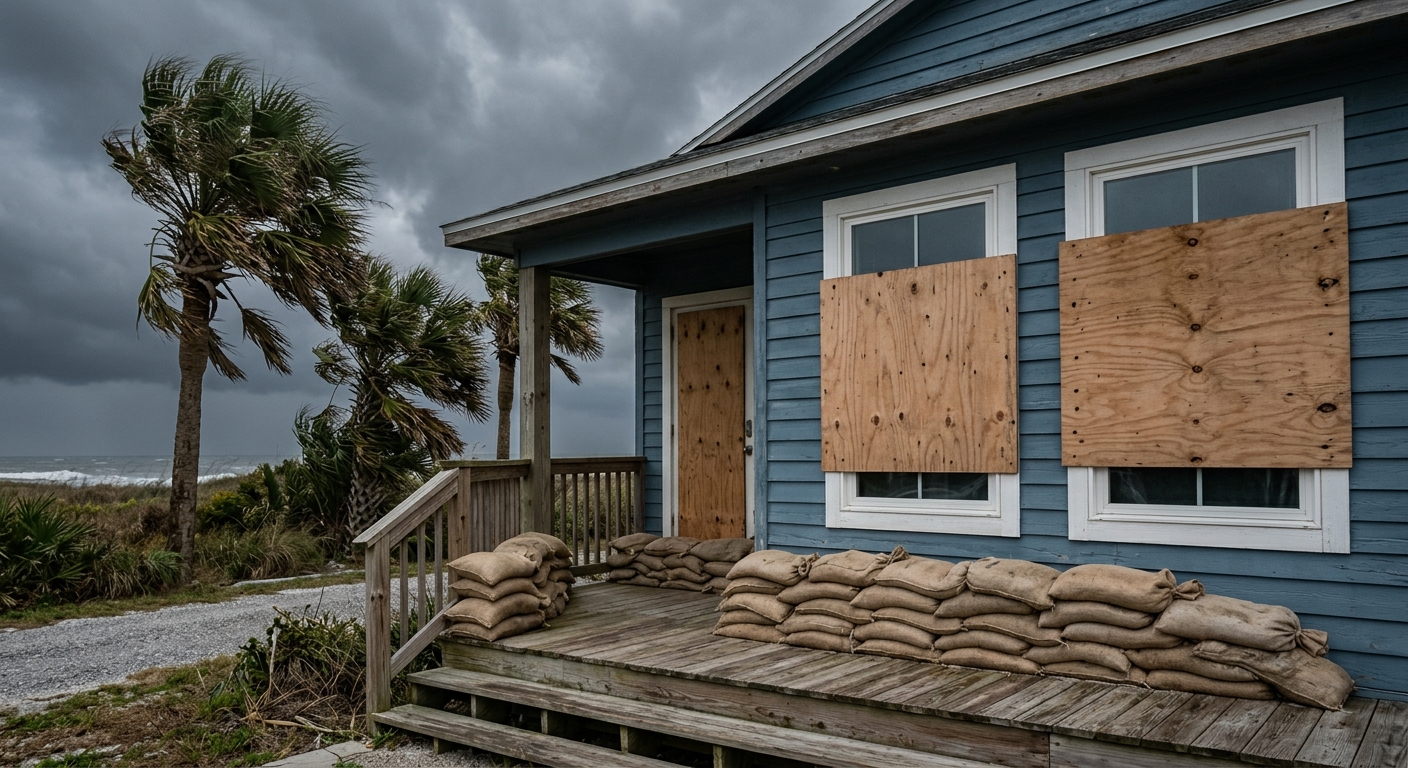
AI-generated illustration; not a photograph of the reported event.
- calendar_today October 9, 2026
Hurricane Isaias Intensifies as It Approaches the Gulf Coast
Hurricane Isaias strengthened into a Category 2 hurricane on Thursday, October 8, 2026, as it moved towards the U.S. Gulf Coast, prompting communities in Florida, Alabama, and Mississippi to undertake urgent hurricane preparations. Authorities issued beach evacuations, closed schools and airports, and warned residents of the approaching storm’s risks, including storm surge, heavy rainfall, and potential tornadoes.
Storm Path and Intensity
The National Hurricane Center reported that Hurricane Isaias had maximum sustained winds of 105 mph (165 kph), exceeding the threshold for a Category 2 hurricane. The storm was traveling northeast at 14 mph (22 kph) and was located about 260 miles (415 kilometers) south of the mouth of the Mississippi River as of Thursday. Hurricane warnings stretched from Ocean Springs, Mississippi, to the Bay-Gulf County line in Florida, while a storm surge warning was in effect from the Mississippi River mouth to the Suwannee River.
Michael Brennan, director of the National Hurricane Center, described Isaias as a dangerous hurricane expected to impact the Florida Panhandle, southern Alabama, and southern Mississippi when it makes landfall late Friday or early Saturday. Heavy rainfall and flooding could reach as far north as Tennessee and North Carolina into the weekend.
Emergency Evacuations and Regional Preparations
As hurricane preparations intensified, Alabama Governor Kay Ivey ordered non-residents to evacuate Gulf Shores, Orange Beach, and Dauphin Island immediately. Traffic gridlock was reported on evacuation routes as coastal residents and tourists left the area. Several Florida school districts canceled classes for the latter part of the week, and counties began mandatory evacuations in some areas. The governors of Florida and Alabama each declared states of emergency for affected counties. Florida National Guard mobilization was expected to include around 5,000 troops by Friday in anticipation of response efforts.
On Dauphin Island, officials encouraged voluntary evacuation, especially for those in the western part most vulnerable to storm surge. Mayor Jeff Collier urged caution, noting the unpredictable nature of hurricanes and the need for readiness. Communities in Mississippi and Alabama were bracing for potential power outages and disruptions to coastal infrastructure.
Storm Surge, Rainfall, and Tornado Threats
Forecasters warned that the combination of storm surge and high tide could cause water levels to rise by 5 to 7 feet (1.5 to 2 meters) in parts of Alabama and Mississippi. Rainfall totals could reach up to 15 inches (38 centimeters) in coastal areas. In addition, tornadoes are possible from the Florida Panhandle to Alabama and southwestern Georgia late Friday into Saturday. The National Weather Service cautioned that "long-duration power outages" were likely in some affected zones.
Impact on Offshore Oil Production and Economic Concerns
The approach of Hurricane Isaias led oil and gas producers to temporarily shut down about 63% of offshore production in the Gulf, which accounts for nearly 15% of total U.S. crude output. The Marine Minerals Administration reported that 121 of 371 Gulf oil platforms had been evacuated, removing nearly 1.3 million barrels of oil from the market daily. Analysts noted this production cut could influence markets, though similar hurricanes have previously caused greater disruptions. There is additional concern should the hurricane strike near key refineries.
Community Response and Broader Context
Residents and businesses in the path of Isaias made final hurricane preparations, securing property and livestock and safeguarding boats. In Pensacola, the airport prepared to close to commercial flights, while officials urged community members to check on vulnerable neighbors. The hurricane's landfall could also disrupt major regional events, including a planned college football matchup between Georgia and Alabama, which President Donald Trump was expected to attend.
Hurricane Isaias is the first hurricane of the unusually quiet 2026 Atlantic hurricane season, developing just days shy of a record for the latest first Atlantic hurricane since 1905. Weather experts attribute this calm period to a strong El Niño, which has suppressed Atlantic storm development but fueled higher activity in the Pacific.
Historical Context
The Gulf Coast is no stranger to major hurricanes, having seen devastation from storms such as Camille in 1969, Katrina in 2005, and Michael in 2018. Authorities continued to urge coastal residents to prepare and emphasize the unpredictable nature of hurricanes as Isaias approached.
Source: whnt.com.