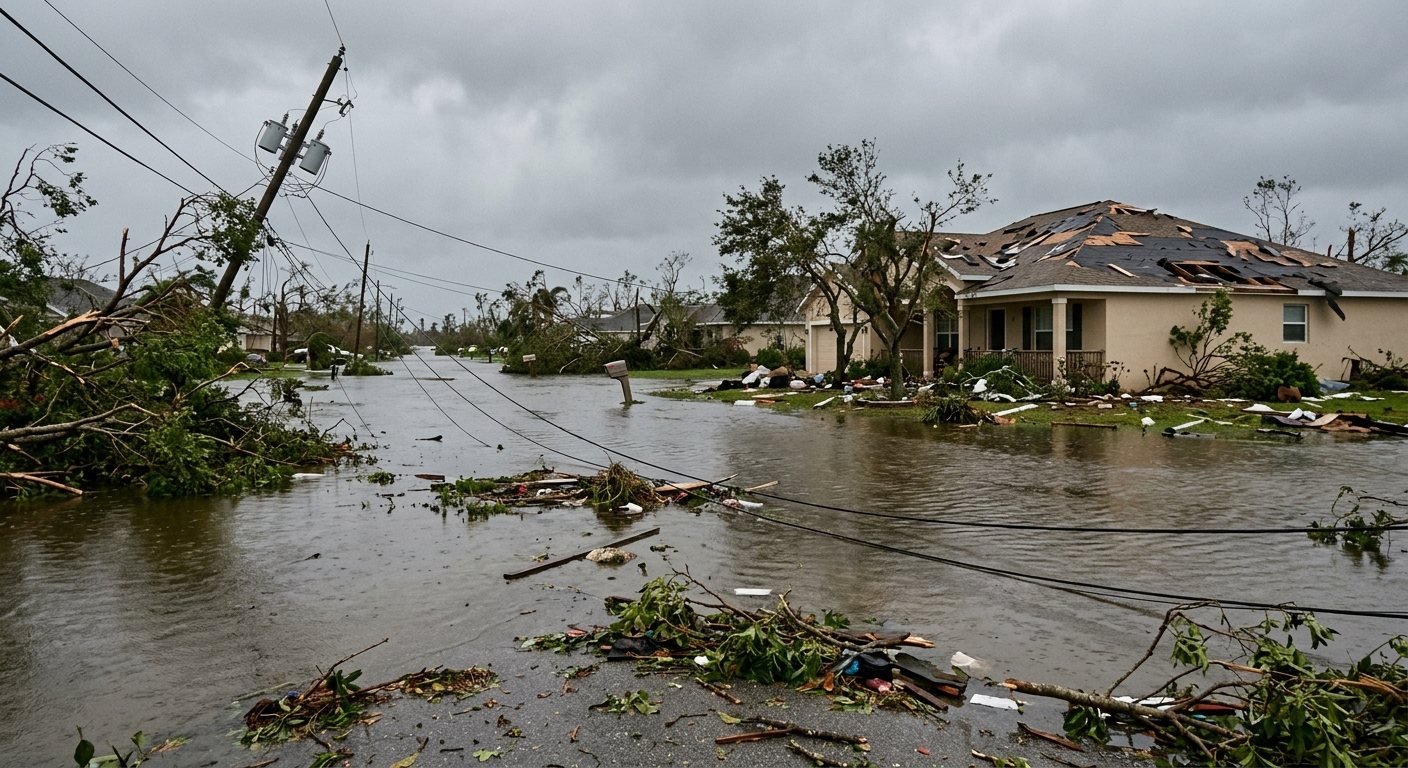
AI-generated illustration; not a photograph of the reported event.
- calendar_today October 10, 2026
Hurricane Isaias Ravages Florida Panhandle Before Pushing North
Hurricane Isaias made landfall as a Category 2 hurricane near Destin, Florida, late Friday, October 9, 2026, bringing destructive winds, torrential rain, and a significant threat of flash floods and tornadoes throughout the Southeast. The storm battered the Florida Panhandle, tearing roofs off homes and condominiums as officials and residents began assessing the aftermath the following morning.
Casualties and Widespread Power Outages
As Isaias pushed northward, the impact was deadly. Two people were killed by fallen trees—one in Florida's Escambia County and another in Birmingham, Alabama. Sheriff Chip Simmons confirmed the death of a woman in Escambia County after a tree crashed into her home. In Alabama, Birmingham Fire and Rescue Service Chief Cory Moon reported that another person lost their life the same way, while a second person was rescued from the scene and treated for injuries.
The destructive force of Isaias was compounded by power outages, with approximately 800,000 customers losing electricity, mostly in Florida and Alabama. Communities are working to restore power while grappling with blocked roads and damaged infrastructure.
Storm Damage Across Florida's Panhandle
Throughout the Florida Panhandle, reports of damage were widespread. In Destin, a boat house collapsed under the force of the storm. Pensacola experienced severe wind damage, with hotel roofs torn off and disruptions at the city airport. Streets flooded and debris littered neighborhoods. Residents in Panama City and neighboring areas were seen cleaning up insulation, metal fragments, and other wreckage scattered by hurricane isaias.
Local accounts, like that of Tim Mowry in Pensacola, highlighted both anxiety and relief. Mowry, experiencing his first hurricane, said, "For my first one, I'll take it... I was expecting the worst." While some faced downed fences and scattered belongings, major roadways along the coast were remarkably clear of the catastrophic tree and power line damage often seen after major hurricanes.
Alabama Bears the Brunt of Severe Winds and Tornado Threat
After battering Florida, isaias storm moved into Alabama overnight, sustaining tropical-storm-force winds and causing widespread storm damage. Mobile and surrounding areas reported downed trees, felled power lines, and numerous road closures. In Gulf Shores, Maranie Adams and her family rode out the tempest with minor damage, recalling a sense of relief compared to previous storms like Hurricane Sally. "We have a few limbs down, some leaves everywhere, but we're very spared," Adams noted. "Everything's open on the island today."
Continuing Risk: Flooding and Dangerous Weather Stretch Across the Southeast
The National Hurricane Center warned that the storm, despite weakening to a post-tropical cyclone, still poses significant risks. Meteorologist Robbie Berg emphasized, "So even though it has become post-tropical, it still does remain a wind threat, as well as a heavy rainfall threat. We could see some areas of significant flash flooding over the next couple of days." Forecasts predict 4 to 8 inches (10 to 20 centimeters) of rain for southern Alabama, the Florida Panhandle, and Big Bend, with the storm tracking toward the Tennessee Valley and mid-Atlantic regions.
Context: Hurricane Season and Pacific Storms
This year’s hurricane season has been unusually quiet, with Isaias marking the first hurricane to strike the eastern United States since 2024. Meanwhile, in the Pacific, Hurricane Simon intensified to Category 4 and approached Mexico's coast, while Tropical Storm Rachel threatened northern Mexico and Southern California with rain and wind. Authorities across the Southeast continue to stress the ongoing danger of flash floods, power outages, and tornado threats as the impact of hurricane isaias persists.
Source: whnt.com.