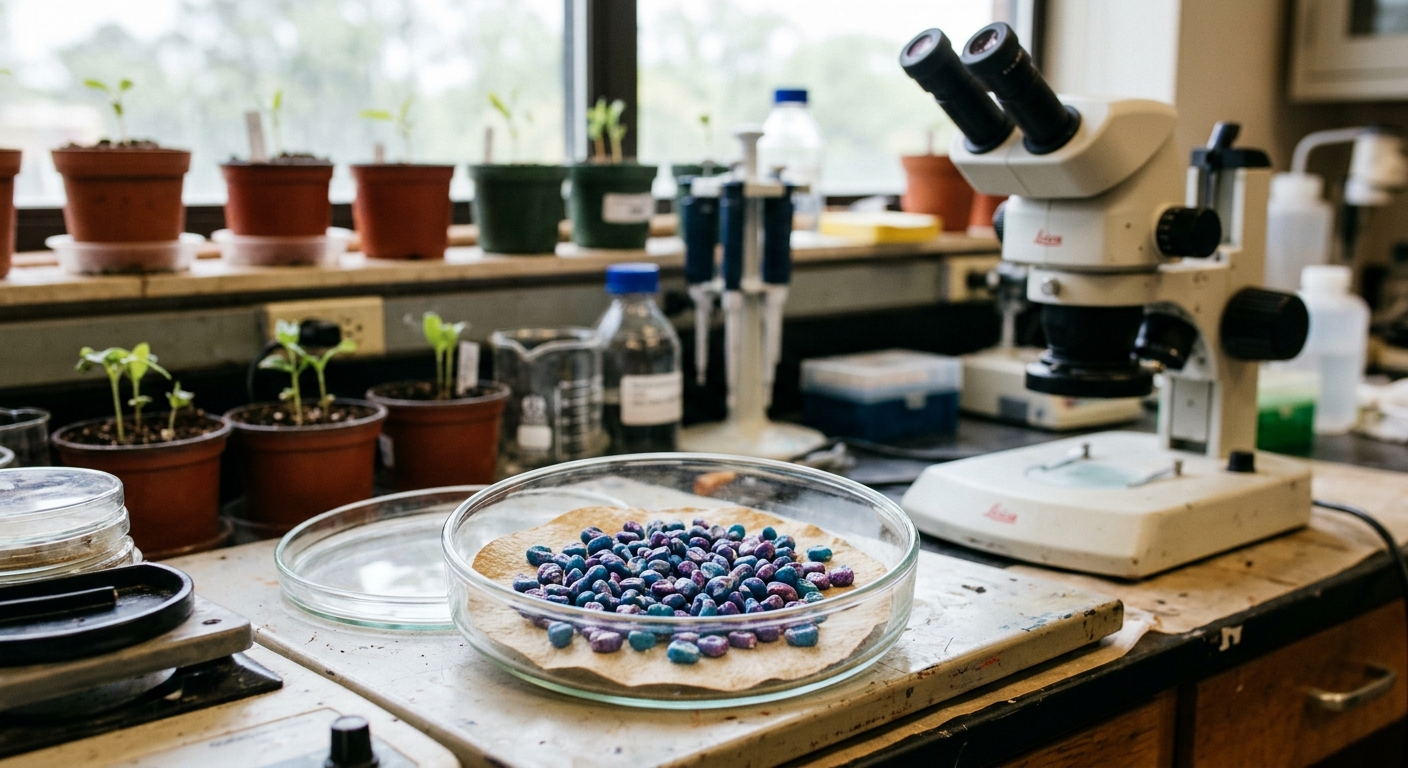
AI-generated illustration; not a photograph of the reported event.
- calendar_today November 6, 2026
Auburn University Receives $6 Million NSF Award
Auburn University has been selected for a four-year, $6 million grant from the U.S. National Science Foundation (NSF) to help bridge the gap between academic research and real-world applications. The funding, awarded through the Accelerating Research Translation program, aims to assist faculty in turning their discoveries into products, startups, and technology licenses.
Supporting Faculty through Funding and Training
This research commercialization initiative will provide faculty with proof-of-concept funding, mentorship, and entrepreneurship training. The program is designed to help researchers identify potential uses for their discoveries, assess market demand, and develop working prototypes. Faculty will be eligible for up to $50,000 in funding through the initiative’s Launch Innovation Fund to support early-stage research and prototype development.
Leadership and Collaboration Across Disciplines
The project is led by Patrick Reed, Auburn’s assistant vice president for innovation and partnerships. The program brings together faculty and administrators from across the university, including the College of Sciences and Mathematics, the Samuel Ginn College of Engineering, the College of Agriculture, and the Harbert College of Business. Key leadership roles in the program include co-principal investigators Mark Liles, associate dean for research in the College of Sciences and Mathematics; Alan David, associate dean for research in the College of Engineering; and LaKami Baker, a professor in the Harbert College of Business and certified I-Corps instructor.
Faculty Venture Studio and Entrepreneurship Focus
LaKami Baker will head the Faculty Venture Studio, a component designed to help researchers discover potential customers and determine the practical uses of their work. The Venture Studio will also provide mentoring and entrepreneurial training to faculty, further supporting the commercialization of new technologies and innovations.
Pilot Project: Advancing Agricultural Innovation
The first project supported by the NSF grant focuses on improving agriculture through a novel seed coating that protects crops from fungal disease. The coating, developed by Mark Liles and his team, combines beneficial bacteria with a pectin-based material. Efforts will focus on refining the formula, conducting field tests, and collaborating with farmers and industry partners to explore commercial opportunities. This treatment may offer added benefits, potentially encouraging root growth and improving crop resilience to drought.
Expanding Student Involvement and Community Impact
The initiative is also committed to student engagement by offering opportunities to gain experience in entrepreneurship and innovation. Additionally, the program will explore approaches for researchers to document and communicate the impact of their work on communities.
Collaboration with the University of Georgia Research Foundation
The University of Georgia Research Foundation and its Innovation Gateway will serve as advisors to Auburn, providing guidance as the university implements and enhances its research commercialization efforts.
Building a Culture of Innovation
According to Steve Taylor, Auburn’s senior vice president for research and economic development, the NSF award will help the institution foster a stronger culture of innovation and support faculty in bringing valuable discoveries to market. The initiative is closely aligned with Auburn University's land-grant mission to translate academic research into solutions with tangible societal benefits.
Related coverage
Source: alreporter.com.