- calendar_today August 8, 2025
.
President Donald Trump is bringing renewed attention to his foreign policy record. On Monday he tweeted that he already ended six wars and that he would bring an end to the war in Ukraine, while hosting the Ukrainian President Volodymyr Zelensky and European leaders at the White House.
“I’ve done six wars — I’ve ended six wars,” Trump told reporters, referring to U.S. military involvement in the Middle East, Africa, and Asia. “Look, India-Pakistan, we’re talking about big places. You just take a look at some of these wars. You go to Africa and take a look at them.”
A recent White House statement listed agreements or initiatives it said Trump had achieved with Armenia and Azerbaijan, Cambodia and Thailand, Israel and Iran, Rwanda and the Democratic Republic of the Congo, Egypt and Ethiopia, and Serbia and Kosovo. The statement also noted “normalization agreements” the administration negotiated during Trump’s first term under the Abraham Accords, which established relations between Israel and several Arab states.
Ceasefires, Not Settlements
Analysts note that many of the efforts are fragile ceasefires rather than permanent settlements. In the case of Israel and Iran, the adversaries have not signed a peace agreement. The Gulf state of Kuwait, which served as a go-between, has said Iran must end work on a nuclear program that Israel and its Western allies believe is aimed at developing atomic weapons, though experts say that conflict is unlikely. Tehran and Jerusalem have been bitter enemies for decades and few think the latest accord will end that.
Efforts to resolve a long-standing conflict between Israel and the Palestinian militant group Hamas have also gone nowhere, even as the Trump administration endorsed an Israeli proposal to weaken the movement in Gaza by supporting an effort by the Palestinian Authority to take over administration of the coastal enclave. Trump’s opening to North Korea’s leader, Kim Jong Un, during his first term also produced a flurry of activity, including three meetings between Trump and Kim, but Pyongyang ultimately received security guarantees and an easing of U.S.-led sanctions while it increased its arsenal.
The most recent initiative announced was a peace declaration signed between Armenia and Azerbaijan at the White House earlier this month. The document commits both sides to recognizing borders and renouncing violence, and creates a U.S.-controlled transport corridor dubbed the “Trump Route for Peace and Prosperity” that will pass through Azerbaijan and connect Armenia to Nakhchivan, a region it administers. Azerbaijani President Ilham Aliyev hailed the deal as “a miracle.”
Cambodia and Thailand
Cambodia and Thailand have also halted a border dispute that in May killed 38 people. U.S. officials acknowledge that the Association of Southeast Asian Nations (ASEAN), a regional organization, played a critical role, but Trump and his son-in-law Jared Kushner also make much of the negotiations and claim credit for their outcome. Cambodia’s Prime Minister Hun Manet nominated Trump for the Nobel Peace Prize, and he issued a statement saying: “Trump does not seek recognition but his humanitarian services and remarkable achievements certainly make him a very worthy candidate.”
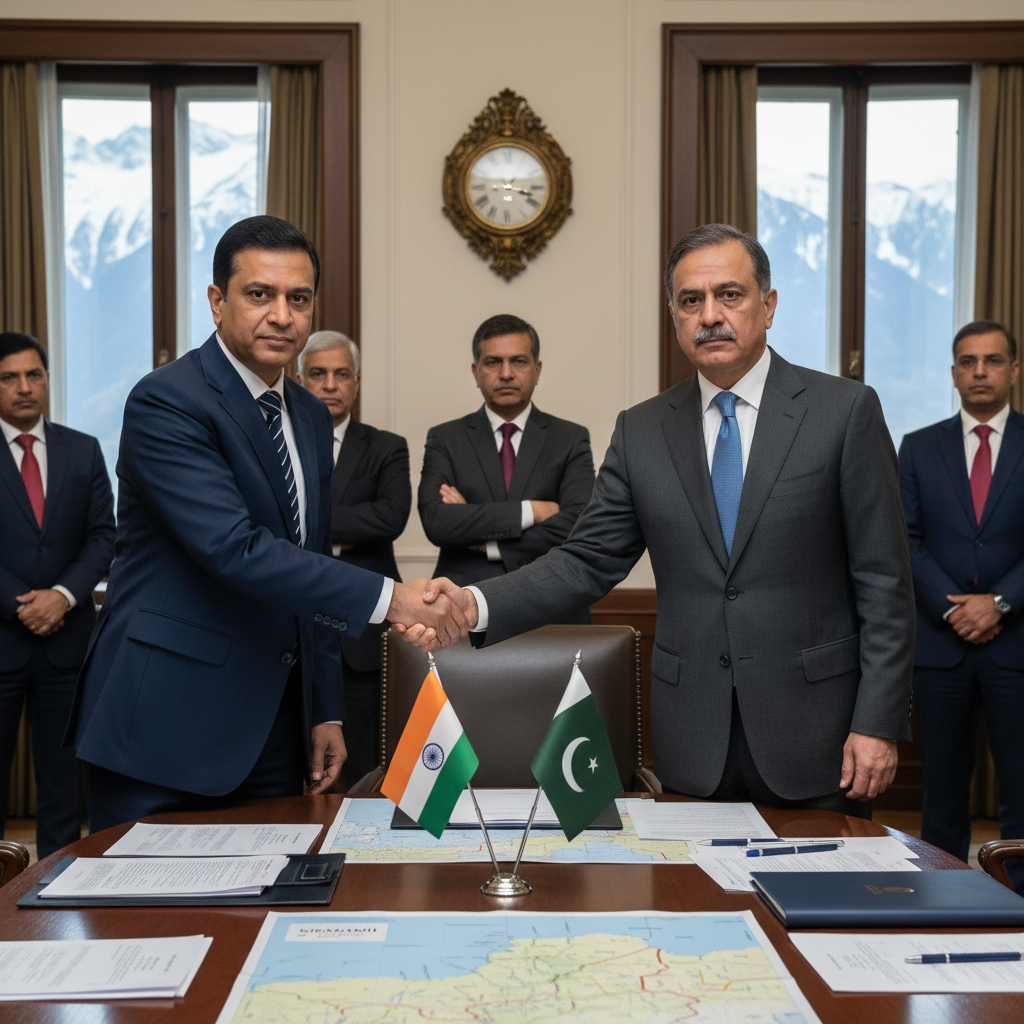
South Asia, and particularly the border tension between nuclear-armed India and Pakistan, has also drawn Trump’s attention. Trump claimed credit for de-escalating a flare-up in May, when he said he spoke to both New Delhi and Islamabad and helped avert an armed conflict. Pakistan’s Prime Minister Imran Khan tweeted a “big thank you” to Trump, but his Indian counterpart, Narendra Modi, did not. The May confrontation between the nuclear-armed neighbors left the status of disputed Kashmir unaddressed, and it is unclear how long the detente will last.
Arab Nations, African Nations
As with some of the other recent developments, Trump has tried to highlight his role in Africa as well, though U.S. influence is more limited in that part of the world. He has pointed to an agreement between Rwanda and the Democratic Republic of the Congo in which the two sides agreed to work together to disarm militias and ease tensions along their shared border. The key player among the armed groups, the M23 rebel movement, was not consulted about the deal and rejected it. Many analysts believe the main U.S. goal is to gain an advantage over China in the control of African mineral resources.
Trump has also made the claim that he is helping Egypt and Ethiopia resolve a long-running dispute over a Nile River dam that the latter is building and that Addis Ababa has been accused of trying to leverage to its advantage. Although Trump has stated that Egypt, Ethiopia, and Sudan, which also borders the dam, need to reach a compromise, no binding agreement has been reached.
Finally, his administration has pointed to recent efforts that it had made between Serbia and Kosovo. The earlier steps, also during his first term, were about achieving a greater measure of economic normalization. As of now the two are not even full diplomatic partners, and recent mediation efforts have been led by the European Union.
Critics say Trump has gone too far in dismantling parts of the State Department and cutting the U.S. Agency for International Development (USAID), hampering his own ability to convert temporary ceasefires into more permanent peace. Others counter that his brash tactics — including name-calling and threats, as well as a heavy focus on personal branding — have been effective in the short term.
‘Professional Way’
Celeste Wallander, a former assistant secretary of defense who is now with the Center for a New American Security, said Trump’s quiet diplomacy between India and Pakistan was more effective than his headline-grabbing rhetoric about it. “The ones that were helpful … were conducted in a professional way, quietly, diplomatically, so that all of the hype was not there, so that it was a U.S. government operation that … was finding common ground between the parties,” she said.
As Trump ramps up what he says is a peace drive in Ukraine, he may or may not repeat some of the record he is touting. But either way, the record is likely to be judged on whether it produces enduring results or is remembered more for bold claims than hard-won solutions.