- calendar_today August 10, 2025
The new “Images in ChatGPT” feature from OpenAI enables users to generate images directly within the ChatGPT platform through an important upgrade. The new feature that lets users generate images during conversations operates using the GPT-4o model to deliver a groundbreaking development in AI content creation.
The latest functionality extends across every ChatGPT subscription level from free to Plus, Pro, and Team versions. The wide-ranging availability seeks to make cutting-edge image creation tools accessible to everyone. OpenAI spokesperson Taya Christianson explained that free tier users will have similar image generation limits to DALL-E 3, which allows three images per day but these limits could change according to demand. Dedicated DALL-E users can continue accessing its features through a specialized GPT interface.
OpenAI research leader Gabriel Goh called GPT-4o an “omnimodal” model because it processes multiple forms of data such as text, images, audio, and video. The model now demonstrates improved “binding” ability, which stands as an essential enhancement. The development solves an existing problem in AI image creation since earlier models could not sustain correct connections between objects and their traits. GPT-4o demonstrates a notable advancement by effectively managing 15 to 20 objects while keeping their colors and shapes distinct.
The system demonstrates a major upgrade through its advanced text rendering abilities. AI-generated images frequently displayed text that was corrupted or meaningless in traditional models. Goh remarked that extensive development took many months of iterative work to achieve the correct result. The team’s work has resulted in text appearing reliably usable in images, despite perfect text rendering for small text remaining a difficult goal.
The system utilizes an autoregressive design rather than the diffusion models that standard image generators depend on. The autoregressive method that builds images starting from the left and moving downwards produces enhanced text rendering capabilities, which experts believe leads to better binding performance.
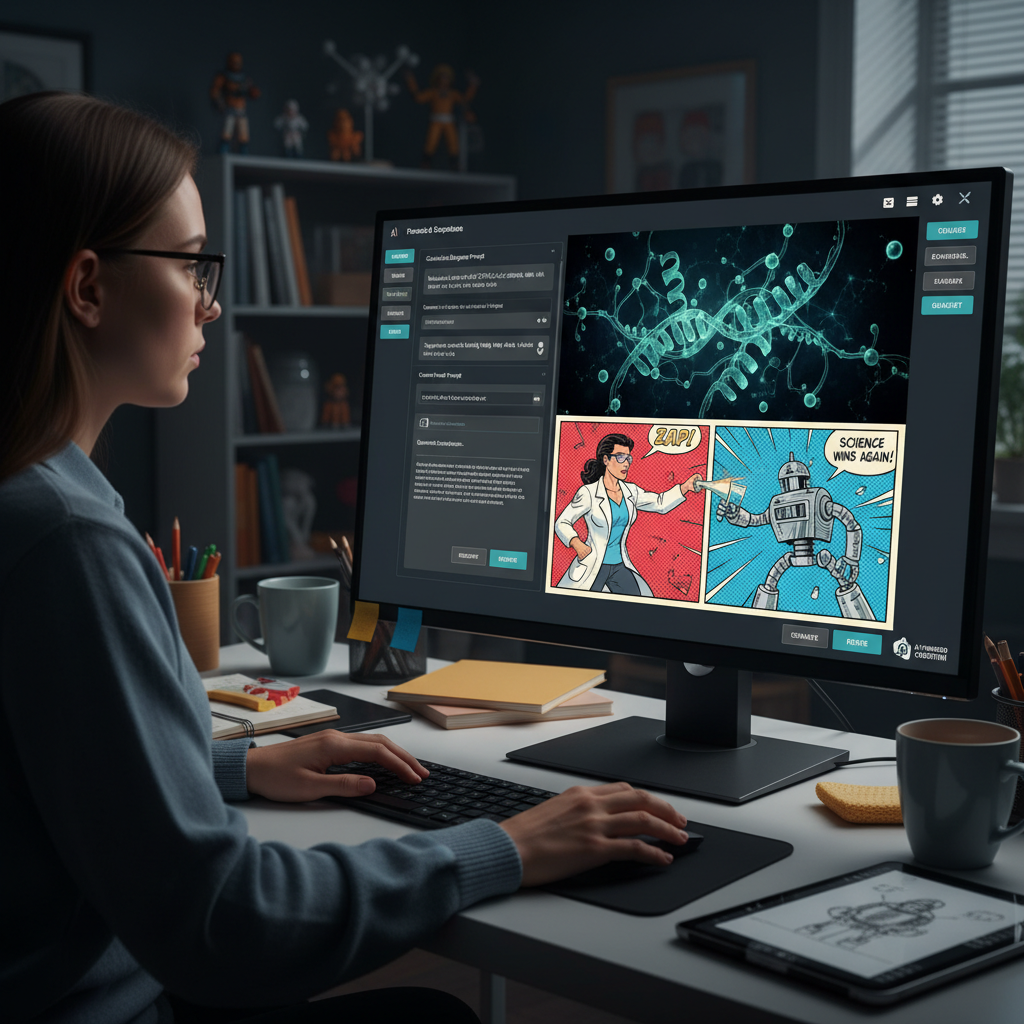
OpenAI presented the system’s various uses in a demonstration that featured scientific diagram creation, such as Newton’s prism experiment, with precise labels alongside multi-panel comics with uniform characters and dialogue, and informational posters containing correct text. Use cases demonstrated practical applications, including the creation of transparent background images for stickers, along with restaurant menus and logos.
Jackie Shannon, who leads ChatGPT’s multimodal products, highlighted the system’s capability to use extensive world knowledge. When she draws an image, she combines her personal skill limitations with the comprehensive knowledge she has accumulated from the world. The model integrates world knowledge into its operations, which allows immediate image retrieval for Newton’s prism experiment without needing an explanation.
OpenAI insists that the improvements in quality and capabilities make the longer image generation time worthwhile. Shannon pointed out that even though there is potential for latency improvement, the advanced quality and knowledge integration of these images compensate for the extra waiting time.
OpenAI reinforced its commitment to mitigating misuse possibilities by establishing strong protective measures. The system works to block sexual deepfake creation and remove watermark protection while also rejecting CSAM requests. Standard C2PA metadata will mark all generated images as OpenAI creations, even though visual watermarks will not appear. The company maintains its own internal tools to verify images.
Shannon pointed out that while every system has flaws in this area, they remain committed to enhancing their protections, and they view these measures as foundational. The images produced by ChatGPT belong to the user who created them and can be used freely according to our established usage policies.
OpenAI extends ChatGPT’s capabilities while advancing AI-driven creativity through “Images in ChatGPT,” which now serves as a robust visual expression tool within its conversational interface. Through this launch, artificial intelligence tools evolve significantly with the combination of conversational AI and sophisticated image generation capabilities.