- calendar_today August 17, 2025
Amid a press conference to “announce that the European Union wants to make a trade deal with us,” former US president Donald Trump took a moment to attack the energy source he has called a “con job” since long before his presidency: wind energy. His allegations? Wind turbines send whales “loco,” kill birds, and poison the ground beneath them. But for all of Trump’s theatrics, his language is neither original nor confined to the United States. In fact, his conspiracy theories mirror those from across the world, and even the past, against renewable energy infrastructure.
Trump also frequently referred to wind turbines as “windmills.” The use of this word in place of the more technically accurate “turbine” is a well-known climate denial meme and, by now, something of a shorthand to the layperson for this particular worldview. Trump’s pronouncements thus stand on the shoulders of a series of moral panics stretching back to the introduction of any number of technologies.
Take, for example, the fears of telephones, pervasive in the 19th century, that the device would cause epidemic disease by allowing germs to travel between cities over wires. (The way that wind turbines have sometimes become co-opted for cell phone towers, as part of multi-use infrastructure, is a small irony.) In both cases, that new technology has become a lightning rod for two different types of human anxieties: those around changes in ways of life, and those around technology outstripping those who built it.
The problem is that these fears are more deeply ingrained than a misunderstanding that can be solved with the right public awareness campaign or science communication. On the contrary, there is a body of research that suggests anti-renewable energy conspiracies are, once taken up as part of a worldview, impervious to basic fact-checking or reassurances from experts.
The politics of resistance
The research also suggests these fears aren’t simply about how they are communicated, but about broader changes in culture, identity, and conceptions of who holds power. Understanding these factors is key to overcoming resistance, because while they may start with “windmills,” in reality, the fight is over a great deal more.
Resistance to the transition
Climate scientists have known since the 1950s that an increase in CO2 emissions could lead to catastrophic and (relatively) rapid changes in the environment, but the fight to develop renewables was initially less about the environment and more about ending the perceived stranglehold of Big Oil, Coal, and Gas. This fight was most obvious in the culture of the 1970s and 1980s, and is typified by a famous episode of The Simpsons, in which the fossil fuel tycoon Mr. Burns builds a tower to shade out the sun and force the people of Springfield to buy his nuclear power.
It was a cartoon, of course, but its theme—the fear that fossil fuel interests would fight renewable energy development—is one that history has shown to be all too well-founded. In Australia, for example, when then-Prime Minister John Howard created a fossil fuel lobbying group under the name of the Low Emissions Technology Advisory Group (LETAG) in 2004, its goal was not to fast-track decarbonization, but to stop it.
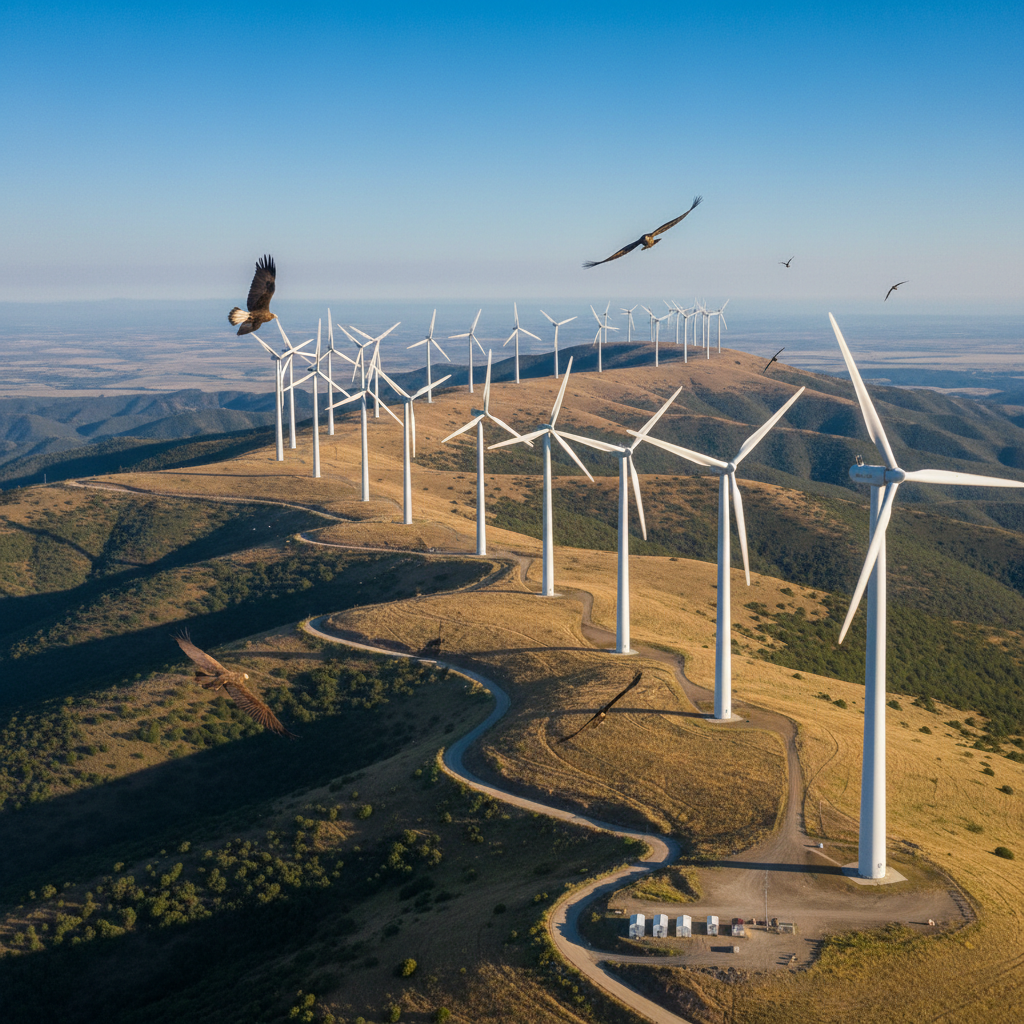
Wind turbines, visible to the naked eye on ridgelines or in open plains (while coal mines, oil fields, and nuclear power plants are often much less visible), have found themselves the center of many anti-renewables conspiracies. In 2009, for example, “wind turbine syndrome” became popular, with wild claims that wind turbines made the ground under them poisonous or caused unexplained blackouts. The medical journal, the BMJ, later found the syndrome to be a “non-disease.”
Academic research has shown the same. A study published in Germany by Kevin Winter and colleagues in 2014, for example, showed that a belief in conspiracy theories was a much better predictor of opposition to wind farms than any number of demographic factors, including age, gender, education, or political party. Studies conducted in the US, the UK, and Australia have come to similar conclusions. The opposition to renewable energy, it seems, may be most powerfully predicted by those who are inclined to believe in conspiracy theories, particularly those about climate change, government control of society, or even energy security.
The reason fact-based pushback doesn’t work against them is that there’s nothing to push back against. It’s not that a person who doesn’t believe wind turbines make the ground poisonous isn’t told otherwise; it’s that they don’t believe it because their objections aren’t based on facts in the first place. These factors are woven into a much larger worldview, and simply refuting false claims about them rarely changes minds. As Winter and colleagues wrote, “Opposition to wind turbines is rooted in people’s worldviews and not simply driven by knowledge and values.”
Wind farms, then, because they are often large and visible, are often used as a proxy for that greater battle, with those in support of wind turbines seeing them as a symbol of climate action, innovation, and progress, and those against them as symbols of everything from government overreach to personal loss of control to vulnerability.
Identity is also a factor here. In online cultures such as parts of the so-called “manosphere,” for example, one key thread is often that manly men shouldn’t be concerned about climate change because it’s “weak” or “feminine” to do so. For many of Trump’s supporters, often older, white, heterosexual men, the energy transition is a jarring change to a world where they once felt secure at the top.