- calendar_today August 21, 2025
.
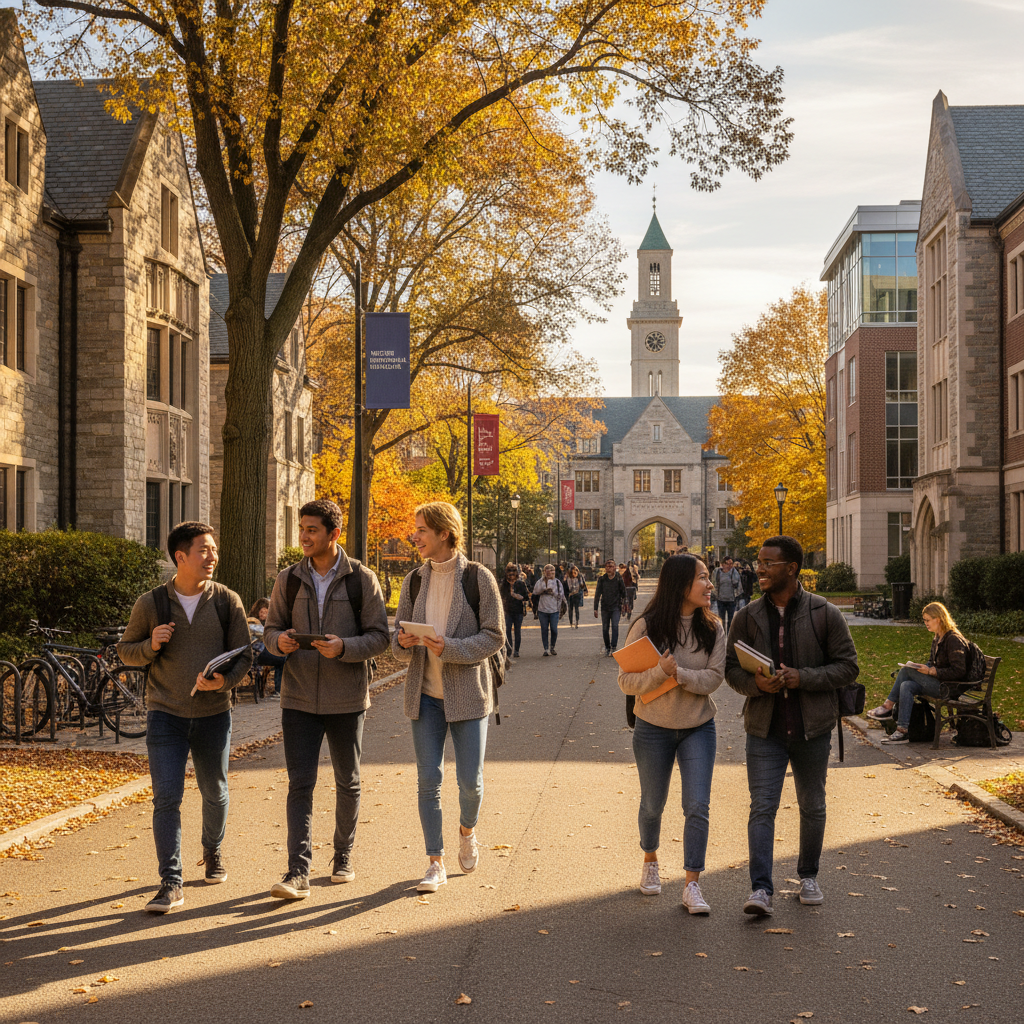
U.S. President Donald Trump on Monday said that 600,000 Chinese students will be allowed to study at American universities, a significant shift from his previous threats to bar them.
In a news conference, Trump doubled down on threats to keep up tariff pressure on China, and suggested that universities could face a sharp decline in enrollment without foreign students from the East Asian country.
“I hear so many stories that we’re not going to allow their students. We’re going to allow their students to come in. It’s very important, 600,000 students. It’s very important,” Trump said. “But we’re going to get along with China.”
Trump’s comments about Chinese students come as the White House has expanded economic sanctions against the country, issuing a tariff hike of 145 percent for all Chinese-made goods earlier this year. Beijing responded in kind, announcing tariffs of 125 percent on all U.S.-made goods.
That continues a tense cycle of tariff increases that began more than a year ago. The two sides have spoken about a truce to stop those new levies, with negotiators from both countries announcing a May agreement in Geneva. Trump, however, has talked up new levies in the past few weeks.
Last week, he mused that the administration would hit China with a new 200 percent tariff on magnets, a key component in everything from computers to refrigerators, saying the move was in response to Beijing’s dominance of the industry.
“It takes years to build them. China, intelligently, went and they sort of took a monopoly on the world’s magnets,” Trump said. “It’ll probably take us a year to have them.”
Chinese students at American universities would no doubt help with that. At the moment, roughly 270,000 students from China are studying in the United States, according to one estimate. Trump’s figure of 600,000 would more than double that population.
The new vow to let Chinese students in marks a shift in tone from earlier this year. In May, State Secretary Marco Rubio vowed to “aggressively revoke” visas for Chinese citizens affiliated with the Chinese Communist Party or who worked at “major research facilities.” The comment was greeted with concern among academics in the United States, who feared a drop-off in talent and tuition.
Trump himself hinted at a shift in June, telling reporters that he was “always in favor of having the students come.” Monday’s comments cemented that position.
Trump made his comments at a news conference in the White House’s Diplomatic Room before meeting South Korean President Lee Jae Myung. Asked about a potential summit with China’s Xi Jinping, Trump sounded as if it was a possibility. “I would like to meet him this year,” he said. “We can’t get along with anybody without talking. So that’s a very important thing.”
“Yeah, we have to have a relationship with China,” he added. “As you know, we’re taking a lot of money in from China because of the tariffs and the different things. It’s a very important relationship. It’s a much better relationship economically than it was before with Biden. But he allowed that. They just took him to the cleaners.”
By following up on a Chinese student visa announcement with more tough talk on tariffs, Trump seemed to be saying that the White House won’t back down on the economic front but that some lines of cooperation would remain open. Universities would likely be the big winners: international students at American universities are already a major revenue source for colleges. In 2018-19, the most recent year with complete data, they brought in $41 billion in tuition and living expenses. The jump from 270,000 to 600,000 would create major churn in enrollments and provide a windfall for a sector still recovering from the economic pain of the pandemic.
At the same time, Washington’s strategy toward China on student visas highlights the contradictions of the current White House approach: a revocation of visas for some students, and extension for others, coupled with major hikes in tariffs and an ongoing dialogue about potential summits.
For now, Trump’s promise will be viewed in both Beijing and American campuses, as politicians, academics, and students wait to see if it’s implemented.