- calendar_today August 29, 2025
In the latest salvo in an ongoing feud, Elon Musk filed a lawsuit Monday against Apple and OpenAI, accusing the companies of colluding to solidify monopolies in the rapidly expanding artificial intelligence chatbot market. The complaint comes just weeks after Musk aired similar grievances against Apple in a public interview, denouncing Apple’s App Store rankings and policies that have kept his own chatbot Grok from appearing on the “Must Have” list in the App Store while showering attention on OpenAI’s ChatGPT.
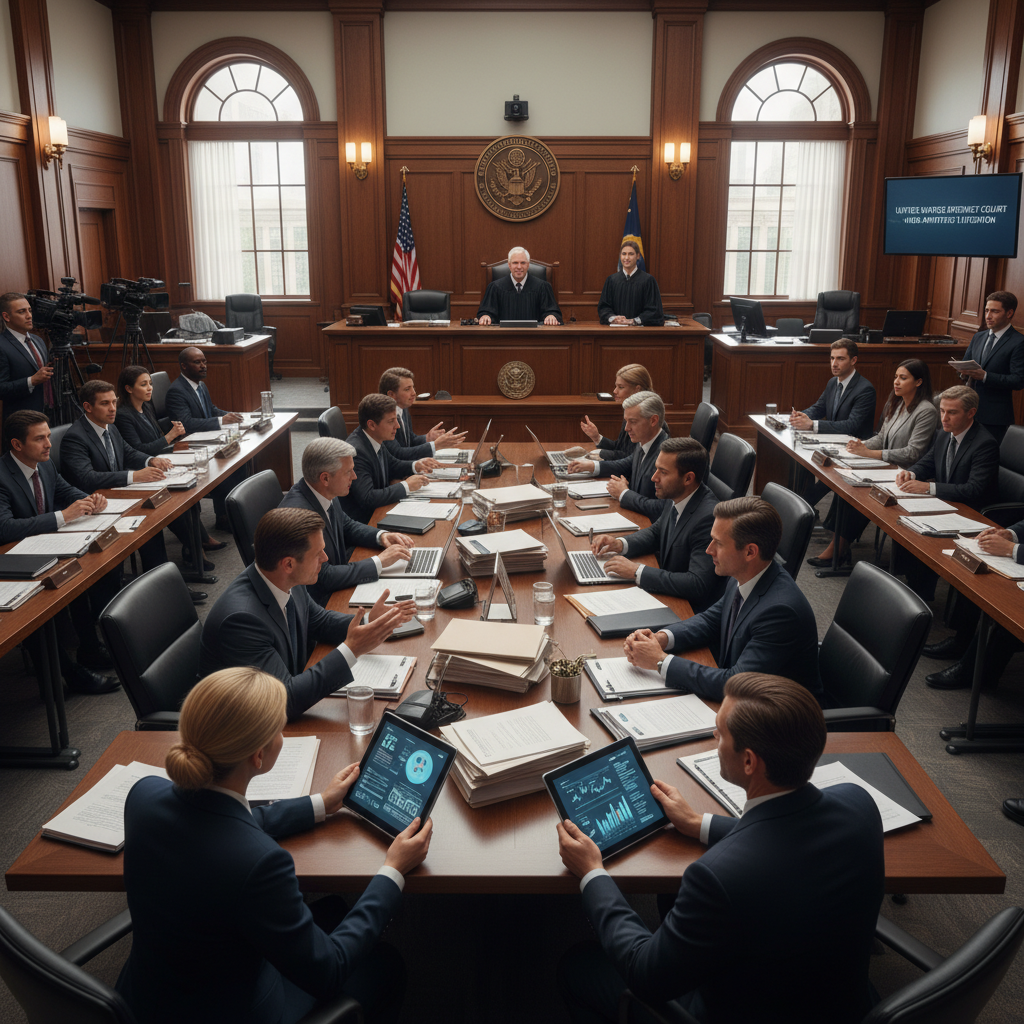
Filed in federal court in San Francisco on behalf of Musk’s companies X and xAI, the lawsuit alleges that Apple and OpenAI have entered into an “exclusive dealing arrangement” to provide ChatGPT with unprecedented access to iPhone features and apps, while locking out competitors from reaching Apple’s customer base. The complaint says the arrangement violates antitrust and unfair competition laws, and could put Musk’s plan to build an “everything app” on the foundation of Twitter—which he purchased in 2022—in jeopardy.
The deal, according to the complaint, integrated ChatGPT into iOS as the default chatbot across Siri, Apple’s Writing Tools, and in other ways, giving OpenAI exclusive access to billions of user prompts. Access to that data, X argues, is critical to training and improving chatbot models, and without it, competitors like Grok will not be able to scale effectively. As a result, the filing estimates OpenAI already has at least an 80 percent share of the chatbot market, and Apple’s integrations could cement OpenAI’s dominance indefinitely.
“Generative AI chatbots would vigorously compete with one another in a fair market. Instead, defendants’ anticompetitive conduct has handed a substantial portion of the market to ChatGPT,” the lawsuit states.
Motivation and Market Power
Apple is allegedly motivated by fear that a successful rival super app like WeChat in China could one day supplant the iPhone, the document claims. It cites Apple executive Eddy Cue as having said in the past that advances in generative AI could “destroy Apple’s smartphone business.” Musk’s filing suggests that the deal is a bid to prop up Apple’s iPhone monopoly, while also giving OpenAI an unbeatable advantage in the budding generative AI sector.
Exclusive access
The complaint compares the deal to Apple’s longstanding search engine arrangement with Google, which U.S. regulators have long argued unfairly cemented Google’s search monopoly. Musk alleges that Apple rejected repeated overtures by xAI to partner with and integrate Grok with iOS. The company even refused to feature Grok in the App Store, the filing says, including when the company launched its new “Imagine” feature earlier this year. In addition, the lawsuit claims Apple manipulated App Store rankings and delayed Grok’s updates as part of a broader effort to stifle competition.
At stake, Musk argues, is not just Grok’s competitiveness but the very future of AI-driven platforms. The lawsuit notes that Siri alone handled 1.5 billion user requests per day globally in 2024. That’s more than the total number of prompts for all generative AI chatbots combined that year. If OpenAI is the sole recipient of those prompts, X argues, that effectively gives OpenAI control of up to 55 percent of all chatbot interactions.
The consequences for consumers, the filing warns, could be serious. The lawsuit alleges that Apple customers could end up with fewer choices and less capable chatbots as a result of the Apple-OpenAI deal, while continuing to pay monopoly prices for iPhones. OpenAI, with an unassailable lead, could also raise subscription prices and provide fewer incentives for users to switch. OpenAI, for its part, has a plan to double its “plus” subscription over the next four years, the lawsuit notes. “That plan would be unfeasible unless OpenAI has power over marketwide prices,” the filing alleges.
The lawsuit also suggests that Apple and OpenAI could be dissuading investment from potential rivals. If Apple continues to “press its thumb firmly on the scale in favor of ChatGPT,” investors will see little value in backing rivals, depriving them of resources needed to grow, and driving talent toward Big Tech firms that can scoop up underfunded startups.
Musk also questions the financial logic behind the Apple-OpenAI deal. According to X, OpenAI essentially gave ChatGPT to Apple for free, and is paying Apple at least $200 million per year for a deal in which the technology giant expects to take in no near-term profit. The filing suggests the companies are viewing the exclusivity itself as more valuable than direct revenue, as it broadly blocks rivals and helps entrench both Apple and OpenAI’s market positions.
“By making the deal exclusive, Apple sacrificed the profits it would have earned by integrating multiple chatbots,” the complaint argues. “The true motive was Apple and OpenAI’s shared goal of blocking competition.”
Potential Damages
For Musk, the potential implications are stark. He warns that without court intervention, Grok may never be able to effectively compete, leaving X less attractive to users and investors. “Because Grok’s functionality is a key feature of the X app, the X app is more attractive the better Grok performs. The better Grok can perform, the more unique, valuable, and desirable a product the X app is,” the filing states. “Defendants’ conduct makes Grok less able to compete with ChatGPT, leading to fewer customers, less revenue, and ultimately a depressed enterprise value for X.”
Musk’s companies are seeking billions in damages as well as a permanent injunction blocking Apple’s integration of ChatGPT, to force Apple to open up similar access to Grok, and to prevent Apple from blocking third-party apps from “working with chatbots of xAI’s choosing.”
Reached by Ars Technica, OpenAI pushed back, saying the filing was “part of Elon’s ongoing pattern of harassment against OpenAI.” Apple declined to comment.
Whether a court agrees with Musk that Apple and OpenAI have illegally cemented their dominance could determine not only the fate of Grok but also the next chapter of AI innovation.