- calendar_today September 1, 2025
When it comes to making cars and motorcycles, there’s no denying that Japan’s Honda is a giant in the industry. But with a recent launch and landing test of its very own rocket, it’s a giant on the path to space as well. This week, Honda, using its research and development team, made history by successfully launching and landing a rocket for the first time.
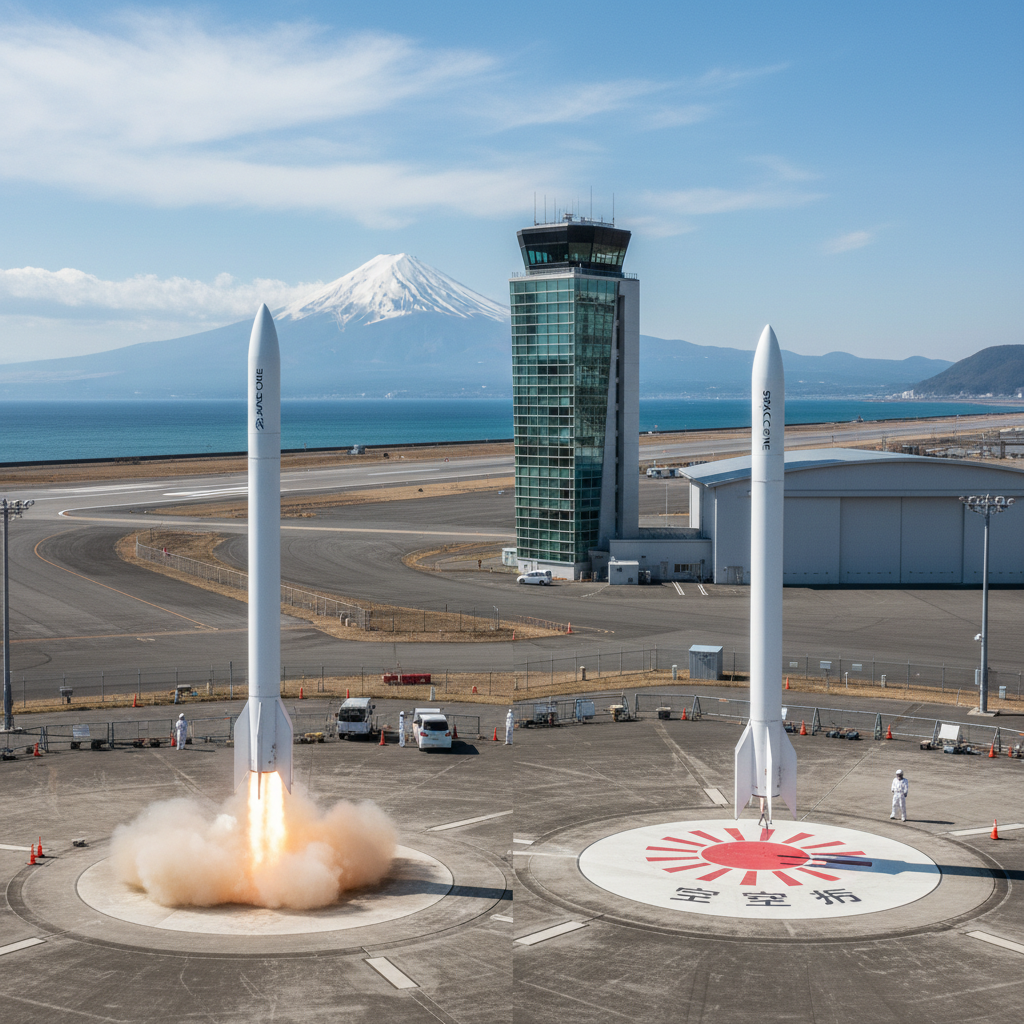
The feat didn’t happen in some foreign launchpad in the middle of nowhere, either. Honda’s facility in Taiki Town, Japan, was the location of the test, and the place is quickly becoming a budding spaceport. The rocket flew to a maximum height of 890 feet (270 meters) and came down within 37 centimeters of its target landing zone.
That’s not luck — that’s engineering.
In case you were wondering, the rocket used in the test was nearly 21 feet (6.4 meters) tall and weighed over 2,800 pounds (1,259 kilograms) when launched. During the test, it remained airborne for 56.6 seconds. It’s worth noting that this wasn’t a short flight; it was brief. In that time, the rocket proved that it could fly vertically and land in a precise spot. While its landing legs were used to keep it on the ground during launch, they played a vital role in returning it back down in a gentle manner and on target.
That’s not something you’d expect from a company whose primary experience is creating ground-based vehicles. However, it’s worth noting that Honda’s successful landing wasn’t some flight of fancy. It proves that the company is doing more than testing a new concept — it’s creating spaceflight hardware that works.
To be clear, Honda didn’t jump into space unprepared. The company first announced its intention to research and develop space technologies at the end of 2021, but it’s mostly kept a low profile since. After all, while the company is now putting some focus on its space project, it’s a vast undertaking with more to it than just an occasional test flight. This week’s launch and landing test shows that Honda is finally beginning to reveal the progress that’s been made behind the scenes.
Honda isn’t creating a new ecosystem from scratch. Instead, it’s leveraging technology already used in other industries, such as cars and robots. Its automatic driving systems, for example, play a big part in the company’s rocket program. The precision required for autonomous vehicles is what allows for the guidance of vertical takeoff, flight stabilization, and pinpoint landing.
In this case, it’s not just a transfer of technology from one industry to another. It’s one that works, and there’s a reason for that.
The rocket that Honda tested this week isn’t some tech demo. Instead, it’s a sign that Honda wants a part of the future. In that future, satellites and space-based infrastructure will be more essential than ever to businesses’ everyday operations. Whether it’s data transfer, navigation, or communications, there’s a lot of value in access to space.
While the rocket is in the basic research phase, the success of this test could be the start of more to come. Honda believes it can build its own small launch systems that are used for more and more satellite launches — a space where it can combine automotive, robotics, and communication industries.
That’s the vision for 2029. It’s a year in which Honda hopes to achieve suborbital space. This type of flight doesn’t place a rocket in orbit. Instead, it breaks through the atmosphere but doesn’t stay in space — which is why it’s a technological challenge. For example, the highest point it reached in the test this week was 890 feet (270 meters) — the point considered to be in space.
If Honda successfully achieves a suborbital flight, it will prove that it’s developed propulsion, control, and landing systems. Placing a satellite into orbit would require more than simply flying beyond Earth’s surface — it would mean developing a new launch vehicle, guidance system, and payload technologies.
That next step isn’t a given. The company hasn’t committed to turning its rocket project into a commercial operation yet. Still, this test is putting it on a path where that decision won’t be far off.
Taiki Town, the launch site, isn’t just a pretty backdrop. Instead, the region is actively working to become a hotbed of space development. Located in Hokkaido, it’s teamed up with several private companies and national entities like JAXA to create testing grounds, support facilities, and training programs.
Honda joining the other companies performing live experiments is putting the region on the map as one of Japan’s top innovation centers for space.
Honda has a long way to go. SpaceX and Blue Origin, two of the world’s largest space launch companies, are ahead of it. Those companies have years of experience and resources under their belts. However, Honda has something unique. It has experience in manufacturing efficiency, robotics, and mobility technology — an area that could give it an advantage as it moves ahead.
This week’s test wasn’t some one-off. Instead, it’s a signal that Honda is looking at a future far beyond Earth’s surface.