- calendar_today September 2, 2025
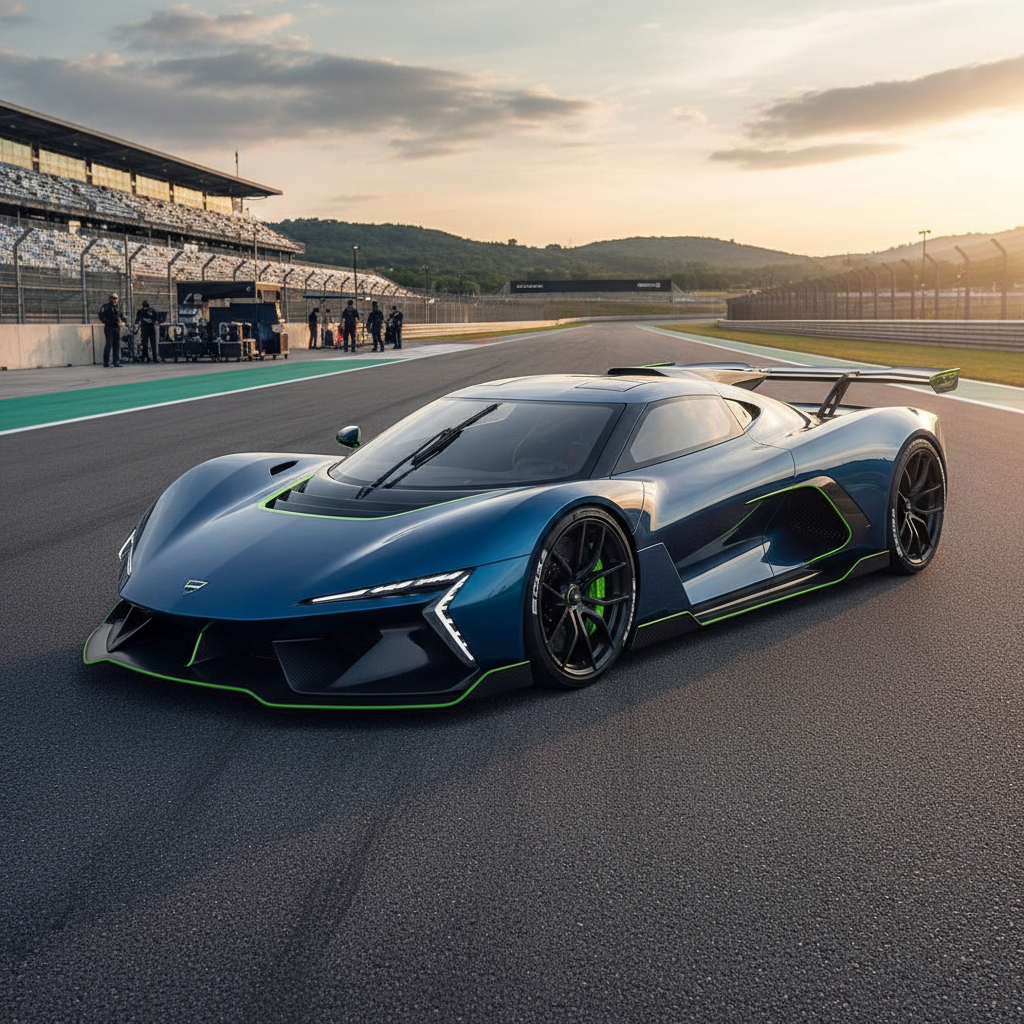
Chevrolet has laid down the challenge. The company hinted at something even more extreme, the ZR1X, while performance aficionados were digesting the jaw-dropping specs of the new ZR1. It’s not only a faster Corvette; this one is also the most technologically aspirational of all.
Chevy has produced a hybrid monster with astonishing 1,250 hp (919 kW) by coupling the powerful ZR1 engine with a front electric motor. For comparison, that is almost three times the normal C8 Stingray output.
The ZR1X does not only bring electrification to pursue fuel economy. It unlocks fresh degrees of performance—especially in off-the-line acceleration and cornering grip.
Building a Hybrid Hypercar in Engineering
The twin-turbocharged V8 of ZR1 drives this machine from the heart and generates 1,064 hp on its alone. Thanks to a bigger 1.9 kWh battery pack than the one in the E-Ray, it is augmented by a front-mounted electric motor delivering 186 hp and 145 lb-ft of torque.
Today, the formula calls for all-wheel drive. The ZR1X world-beating acceleration numbers come from that electric front axle helping launch the car from 0–60 mph in under two seconds. Maintaining would prove difficult for a Ferrari SF90 or a McLaren P1.
Braking can be just as forceful. GM’s first-ever 10-piston calipers and 16.5-inch carbon-ceramic rotors at all corners equip the ZR1X. Tested on Germany’s Nürburgring, this arrangement lets the car slow down from 180 to 120 mph with an amazing 1.9 Gs of stopping force.
High speeds cause the front axle to disengage at 160 mph, up from 150 mph in the E-Ray. Like the ZR1, the ZR1X can reach a top speed of 233 mph (375km/h) despite the additional components and weight. To replicate the heavier configuration of the ZR1X, Chevrolet even included ballast to their top-speed testing run.
It is indeed heavier. Chevy projects a 500 pound (227 kg) increase above the Z51 Stingray. The ZR1X could tip the scales in its heaviest convertible form at almost 5,000 pounds (2,268 kg).
Nonetheless, performance hasn’t suffered. Chevy says the ZR1X can sustain simultaneously 1 G of both lateral and longitudinal acceleration. Thanks in great part to sophisticated traction and stability control software, which was greatly improved following unusual behavior under pressure—including reverse torque steer and unexpected motor cutouts.
Chief Engineer Josh Holder clarified that they reprogrammed the ZR1X to fix tire distortion at high speeds, so addressing confusing vehicle sensors. Under heavy loads, this produces a more responsive and stable car.
Along with a new Push to Pass button providing temporary access to the full 1,250 hp, drivers can now switch through several driving modes including Tour, Weather, Endurance, and Qualifying.
To increase control during braking, front motor regenerative force is now timed with rear friction braking. Since tires cannot entirely transmit that much power anyway, torque is electronically limited in first and second gear—not to cap performance but rather to protect drivetrain components.
Regarding range specifically for electric-only use? Chevy has not stated numbers, but expectations are low. The E-Ray reached 3–5 miles (5–8km) of EV driving at low speeds; the ZR1X is not expected to do much more. Designed for racing, this is not fuel savings hybrid.
Although pricing is not yet known, the ZR1X could provide hypercar-level performance at a fraction of the cost given the ZR1 beginning at $174,995. Deliveries are projected to start in late 2025.