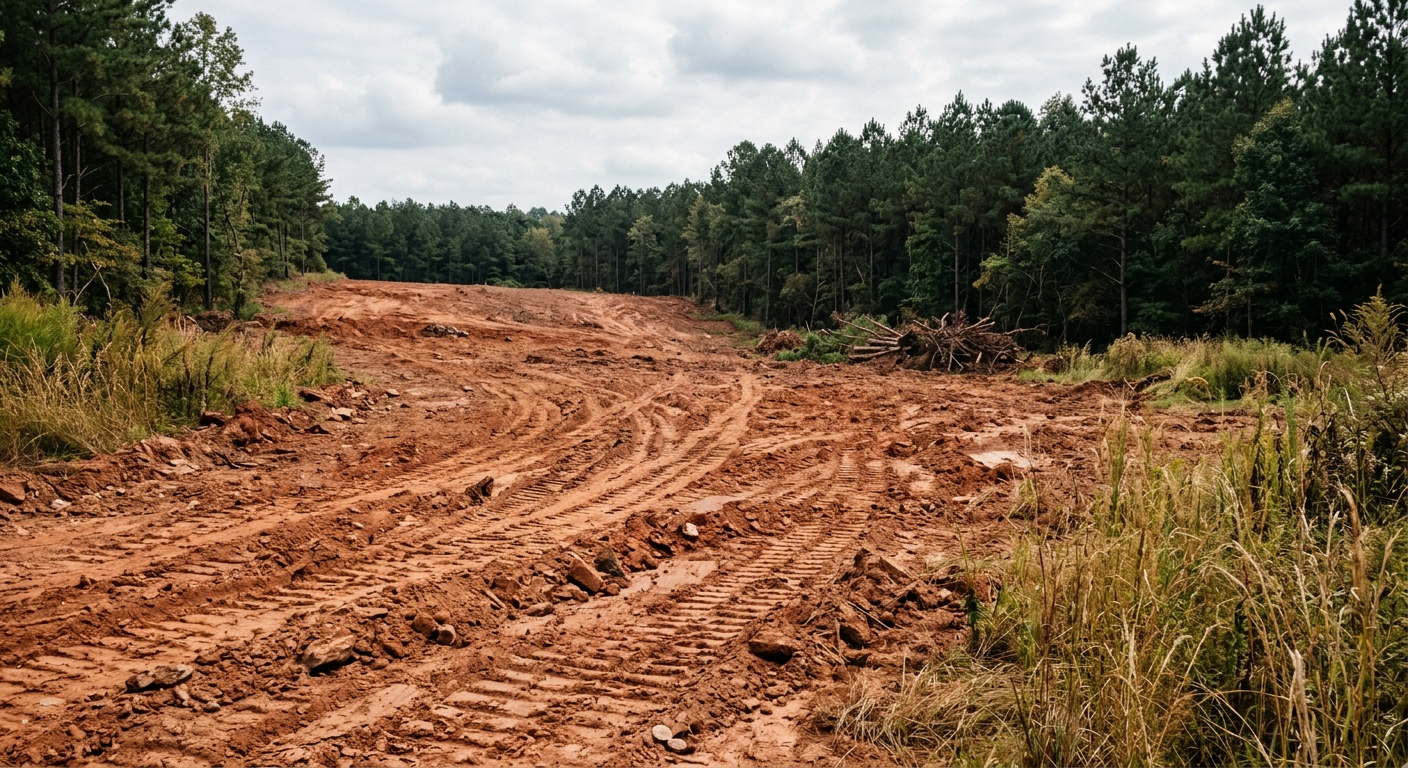
AI-generated illustration; not a photograph of the reported event.
- calendar_today October 19, 2026
Tax Abatement for Lowndes County Data Center Sparks Outcry
The Lowndes County Commission's recent decision to grant over $1.1 billion in tax relief to Cloverleaf Infrastructure for a proposed data center has met significant opposition. The 20-year tax abatement for Project Red Clay, a planned 800-acre hyperscale data center in Burkville, was approved in a 3-2 vote, drawing criticism from residents and advocacy organizations.
Commission Approves $1.1 Billion Tax Break Amid Criticism
Tuesday's commission meeting, lasting only 10 minutes, saw Commissioner Robert Harris move to vote on the tax abatement rather than scheduling a special meeting for public consideration. The vote proceeded and passed without opportunity for public comment, prompting backlash from a local resident and various organizations, including the NAACP, Alabama Rivers Alliance, Natural Resources Defense Council, and the Southern Environmental Law Center.
Opponents stressed the lack of transparency and absence of public input, particularly given the potential environmental and social consequences the data center might introduce to the rural community.
Transparency and Environmental Concerns Raised by Advocacy Groups
According to Abre’ Conner, the NAACP’s director of environmental and climate justice, the commission disregarded residents' concerns about Project Red Clay's potential effects and previous calls for transparency. She highlighted unease about environmental impacts and argued that the commission failed its duty to respond to these worries.
The NAACP, in its statement, expressed concerns over the lack of a clear wastewater disposal plan for the facility, considering that 80 percent of local residents lack reliable sewage systems. The organization noted that Lowndes County already faces a sanitation crisis and questioned the county's capacity to meet the infrastructure demands posed by the proposed project. The developer of the lowndes county data center estimates the facility could require up to 10,000 gallons of water per day and 1.5 gigawatts of power, comparable to the needs of approximately 900,000 homes.
Public Opposition and Concerns Over Process
Ryan Anderson, staff attorney at the Southern Environmental Law Center, condemned the commission's actions, calling the vote "disgraceful" for ignoring public access and input. Charles Miller, policy director of the Alabama Rivers Alliance, linked the approval to a broader pattern of out-of-state developers pushing hyperscale data center projects without considering the wishes of local residents.
Community member Adrian Johnson criticized the developer and county officials for what he described as disrespect toward the community’s values and skepticism regarding the promises being made about the facility's benefits.
Questions Over Economic Impact and Public Disclosure
Supporters of Project Red Clay estimate it would bring $124 million in local tax revenue and $25 million in state revenue each year, with construction expected to begin as soon as 2027. However, opponents argue that economic benefits are being prioritized without adequate assessment of potential harms.
More than 350 residents recently signed a petition pushing for greater transparency, including the release of detailed information about the project's water and energy use, wastewater plans, economic and infrastructure forecasts, and employment projections. Petitioners also called for compliance with an Open Records Act request and the creation of a public online dashboard to monitor the project's progress and impacts.
Developer and Future Actions
Cloverleaf Infrastructure, incorporated in 2024 and previously involved in projects with companies like Nvidia, Meta, OpenAI, Oracle, and Google, has yet to disclose the project's intended end user. The commission's handling of the proposal has prompted advocates to demand increased oversight and meaningful public participation in future decisions regarding large-scale infrastructure projects in the region.
APR reached out to Cloverleaf Infrastructure for comment regarding the criticisms from residents and advocacy groups. At the time of publication, the company has not responded.
Source: alreporter.com.