- calendar_today August 20, 2025
.
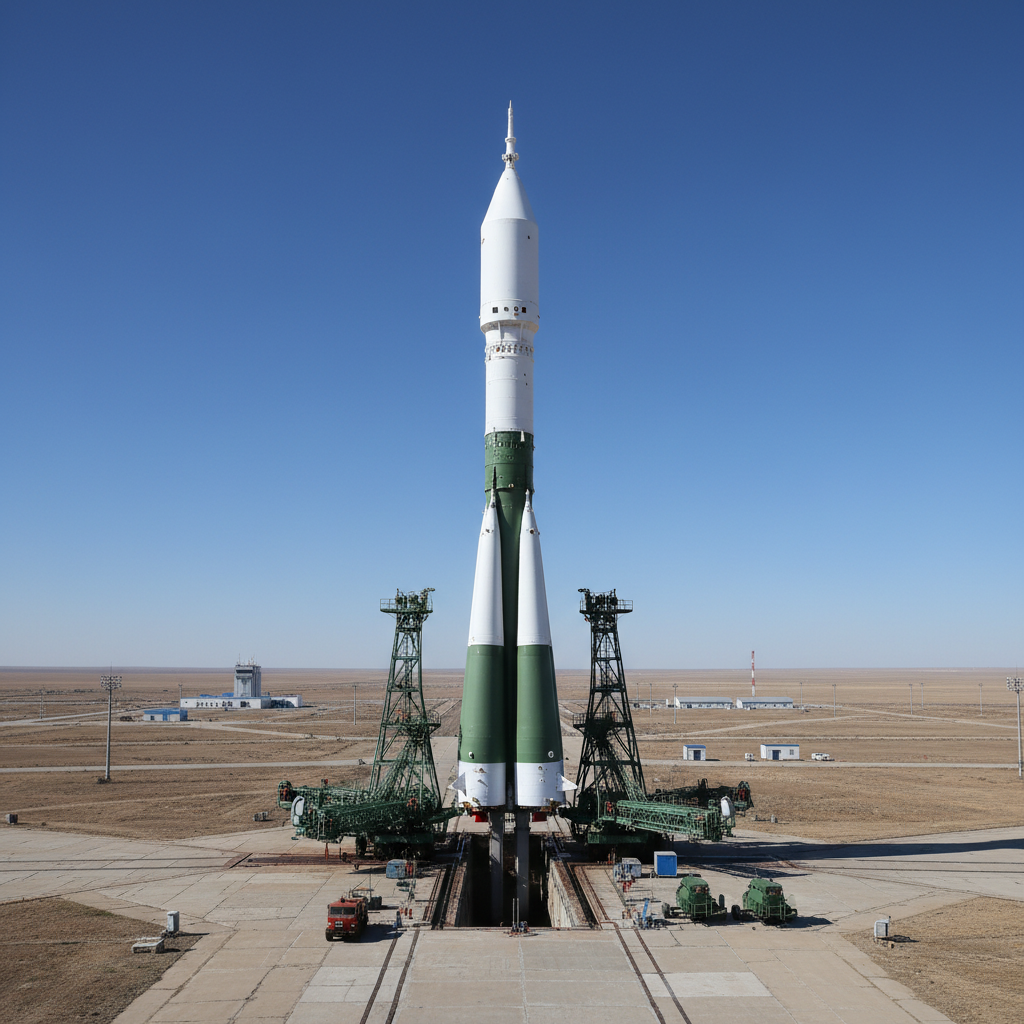
Russia will attempt to launch its newest rocket, Soyuz-5, before the end of this year. Dmitry Bakanov, head of Roscosmos, told the state-owned news agency TASS in a recent interview.
“Yes, we are planning for December,” Bakanov said. “Preparations for the first flight are nearly complete.” The rocket is set to fly from the Baikonur spaceport in Kazakhstan. If successful, it will be the maiden test flight of a vehicle more than a decade in the making. Roscosmos says it could fly several trials before the rocket enters service, but it does not expect to see Soyuz-5 in regular use until 2028.
Soyuz-5’s technical specifications are not revolutionary. The rocket is a mostly Russian-built version of Zenit-2, a booster originally designed by Ukraine’s Yuzhnoye Design Bureau in the 1980s. Zenit launch vehicles were assembled in Ukraine using Russian-produced RD-171 engines. This strange dichotomy of cross-border cooperation was one of the few instances of aerospace partnership in the post-Soviet space, but the mutual respect evaporated after Russia invaded Ukraine in 2022. In late 2023, Russia bombed the plant where Zenit rockets were once assembled.
In essence, Soyuz-5 is a bigger Zenit made in Russia. The redesigned vehicle does away with Ukraine entirely. All core elements, including engines, are built domestically in Russia. That’s a win for Moscow, which has ended years of dependence on its former partner while simultaneously phasing out the long-running Proton-M launcher.
A Bridge Between Past and Future
Technically speaking, Soyuz-5 is a medium-lift rocket. It can carry just under 17 metric tons to low-Earth orbit, a feat made possible by larger propellant tanks when compared to Zenit. The rocket is powered by a single RD-171MV engine, the latest evolution of a very old family of engines.
The original RD-171 dates to the Energia program of the 1980s. Energia was the Soviet Union’s brief attempt at a space shuttle, the equivalent to NASA’s now-retired spaceplane Buran. The new RD-171MV stands out for a single reason: it contains no Ukrainian parts or components. The kerosene-fueled engine, which burns liquid oxygen, can generate more than three times the thrust of NASA’s Space Shuttle main engine, making it the world’s most powerful liquid-fueled rocket engine currently in operation.
As impressive as this may sound, Soyuz-5 remains an expendable rocket. SpaceX’s Falcon 9 and other more modern launchers are built with reuse as a primary design goal. This leads many analysts to question whether Soyuz-5 will be able to attract a meaningful share of the commercial launch market.
Nonetheless, it is an important vehicle for Roscosmos. War expenses and Western sanctions have strained Russia’s aerospace budget, making the development of a completely new reusable rocket extremely difficult. The Amur project, also known as Soyuz-7, is what was intended to meet this need. Amur, with a reusable first stage and methane-fueled propulsion system, would one day be able to compete with SpaceX for price. But delays have pushed the project’s maiden launch to 2030 or beyond.
Soyuz-5, by comparison, is a stopgap solution. In a perfect world, Russia would have already moved on from Soyuz-type hardware, but delays on Amur leave it in a difficult position. Soyuz-5 allows Roscosmos to keep the program afloat, even if it does so with 1980s-era technology.
Roscosmos has also had difficulty breaking into the commercial launch market, and the situation may not change with Soyuz-5. The global launch industry has shifted in the last 10 years, with the rise of SpaceX and, more recently, Chinese launch companies offering cheaper and more flexible alternatives. Russia still flies Soyuz-2 rockets for crewed missions and the Angara family for heavy payloads, but neither vehicle has found much of an audience abroad. Soyuz-5 could buck that trend, but it is unclear whether this will be the case.
Nonetheless, getting Soyuz-5 to the point of launch in today’s geopolitical environment is a significant achievement for Roscosmos. A successful launch in December will demonstrate that sanctions and a shrinking space budget have not yet prevented Russia from putting new hardware on the launch pad.
Soyuz-5 is not, and should not be, an evolution in rocket design. But it will be important to Russia in other ways. It is a step toward greater independence from foreign technology, as well as a bridge to the next phase of Russia’s rocket industry, whether that means Amur or some other design currently on the drawing board.