- calendar_today August 22, 2025
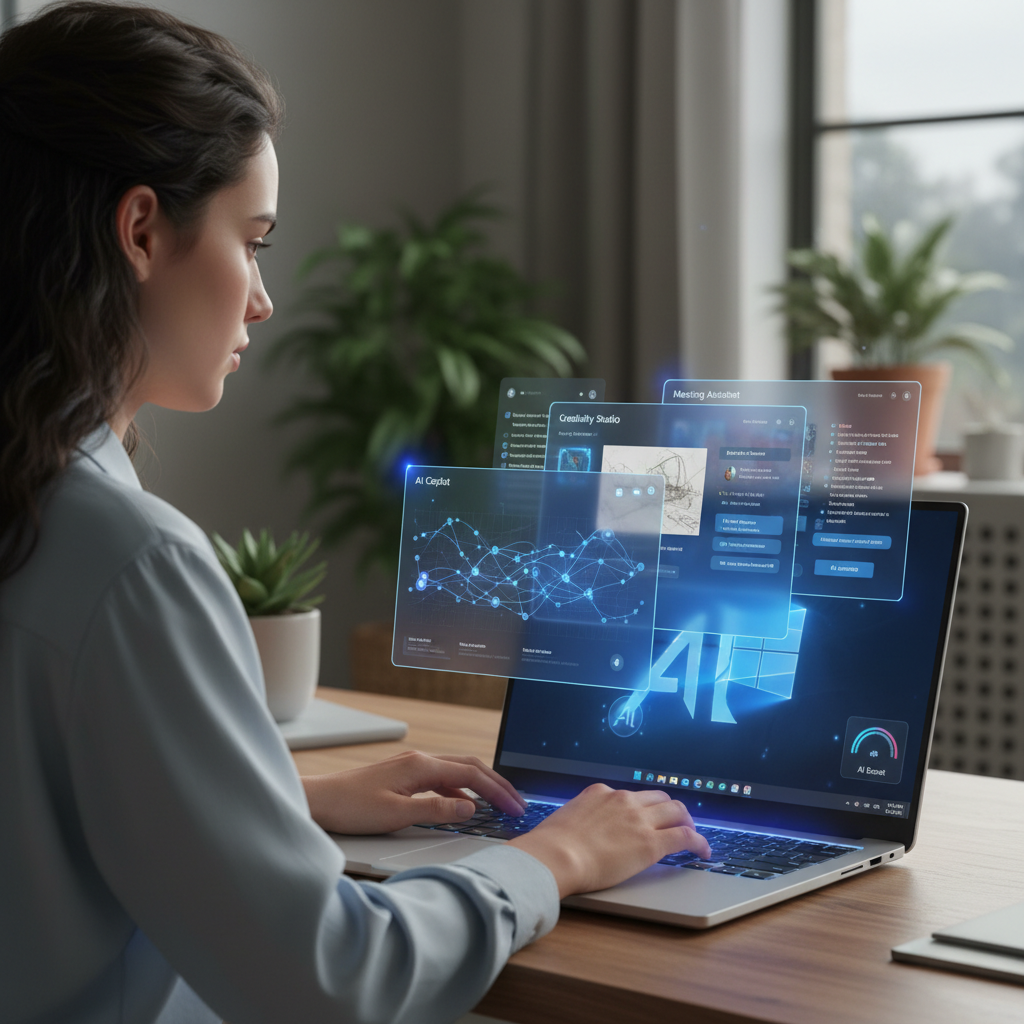
Not only the much-awaited Windows Copilot, but Microsoft is progressively bringing artificial intelligence right into the core of Windows 11. According to a Windows Central analysis, Microsoft is testing artificial intelligence-powered improvements for venerable tools, including Photos, Camera, Snipping Tool, and Paint. Many people take these apps for granted, but they will soon become far more powerful with intelligent features that simplify, speed, and smartly coordinate your workflow.
Optical character recognition (OCR) is one of the elements under testing right now. This will enable simple text pulling from images. Consider grabbing a screen grab of a handwritten note, a slide from a conference, or a product label. You will be able to choose the text straight from the image and copy it anywhere needed instead of laboriously typing it. Not one third-party app, not one clumsy workaround. Simply natural, built-in capability. Though it’s not a flashy feature, it’s quite useful and exactly fits most people’s daily usage of their devices.
Within the larger tech ecosystem, this capability is not novel. Apple’s neural engines have driven a Live Text function that has similar powers on its devices. Microsoft today seems prepared to provide the Windows environment with that same convenience—and maybe even go a little bit further. Microsoft is enabling information in images to be more easily accessed by including OCR into Photos, Snip Tool, and Camera.
Microsoft is also testing tools that let the Photos app separate objects, people, and pets found within a picture from their background. For those who wish to remove clutter, create transparent cutouts, or highlight particular areas of an image without depending on complete-blown image editing software, this has lots of possibilities. Long reserved for applications like Photoshop, this kind of smart editing capability will soon be available right from your default Windows tools.
AI is reimagining even the Paint app, long thought of as a simple drawing tool. According to Microsoft, Paint will create the image while users type a prompt such as “a forest under the moonlight with glowing animals,” allowing generative capabilities. Built on OpenAI’s DALL-E model, it’s like what Bing Image Creator already provides. Bringing this technology to Paint could turn it into an unexpectedly strong tool for both creatives and novices. And the best thing is that. Technical know-how, installations, or subscriptions are not required. It’s just Paint; just more intelligent.
Still, these AI-powered capabilities won’t run on any hardware of choice. Their basis is a particular type of chip known as a neural processing unit, or NPU. NPUs are made to effectively and locally handle artificial intelligence loads. NPUs have thus mostly been discovered in ARM-based chips made by Qualcomm, which run a few Windows devices up to now. But with AMD’s new 7040-series chips and Intel’s forthcoming Meteor Lake CPUs also including NPUs, these features are about to become rather more common across standard PCs.
Why is this significant? Because NPUs let features function without depending on cloud computing. Without uploading anything online, your device can extract text, recognize objects, and create images. That keeps your data private, increases speed, lowers lag, and extends battery life. Although they are not things users would consider deliberately, these are rather important in daily computing.
Windows 11 currently only employs NPUs for limited purposes, including background blur or eye tracking in video conferences. Still, the direction is clear. Microsoft is laying the groundwork for a time when artificial intelligence will be subtly enhancing the tools you already use without requiring you to adjust to anything new. AI will be spun right into the OS. AI is silently in the background, enhancing utility without altering your behavior.
And that is the reason this rollout is so clever. Microsoft is enhancing the old instead of asking consumers to try something different. It’s not about adding still another program to your desktop. It’s about making the ones you know use more intelligence. Though it looks nothing like revolution, the outcome is transforming in function. And it could be among the easiest approaches to include artificial intelligence into our daily existence.