- calendar_today August 21, 2025
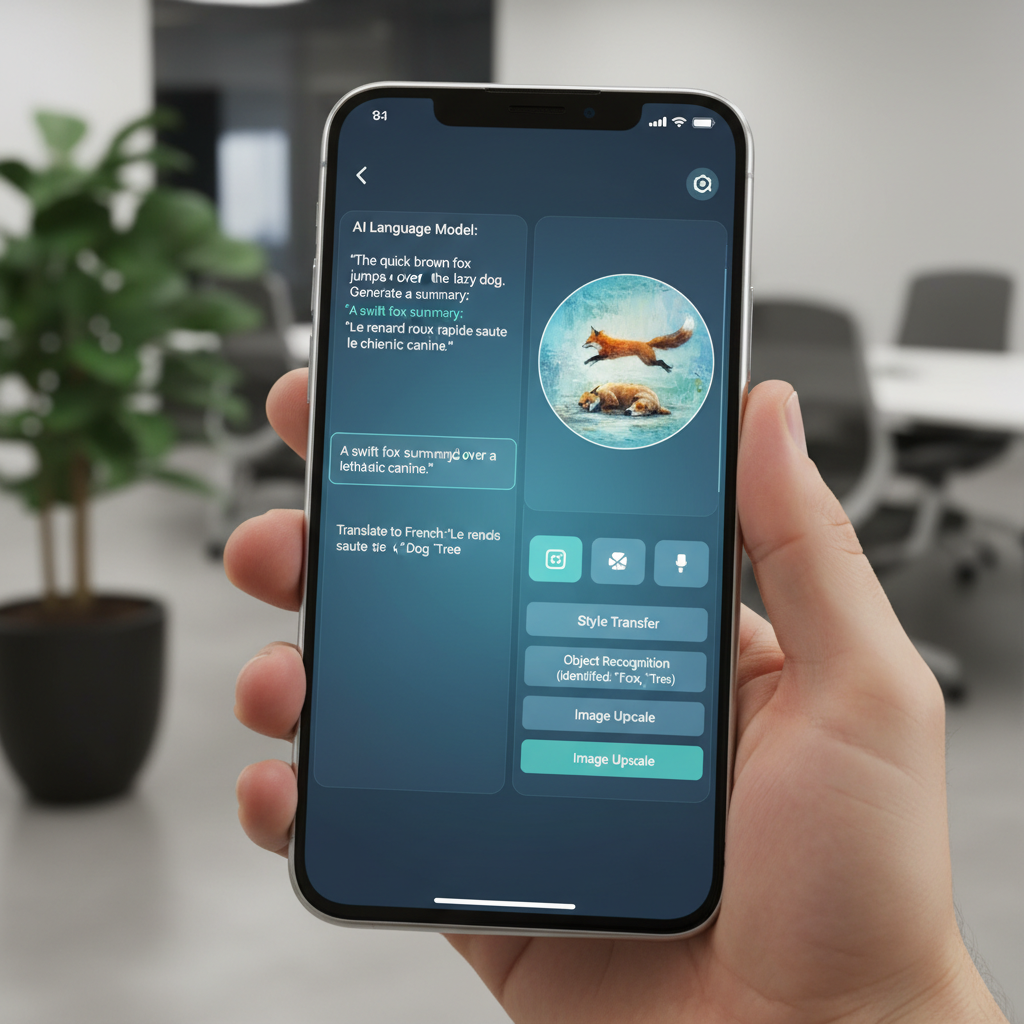
The path of mobile technology development is experiencing a significant transformation due to quick progressions in generative artificial intelligence capabilities. The existing framework for advanced AI features depends heavily on large-scale computational power located in distant data centers, but Google aims to transition these capabilities to operate inside personal smartphones. The tech community buzzes with anticipation for the Google I/O event, which looks poised to introduce new developer APIs tailored to utilize the Gemini Nano model’s processing power for running AI on devices. By shifting advanced AI capabilities directly to user devices, this strategic decision demonstrates Google’s dedication to improving data privacy while boosting application performance through reduced cloud dependency.
Unlocking Local AI Potential
Publicly accessible developer documents from Google have revealed essential previews regarding upcoming AI features set to enhance the Android environment. Android Authority investigative reports confirm that upcoming enhancements to the popular ML Kit SDK will deliver full API support for on-device generative AI capabilities using the Gemini Nano model. The new framework builds upon Google’s powerful AI Core platform, which shares foundational similarities with the Edge AI SDK but showcases its uniqueness through a more cohesive user-oriented design approach. The framework achieves integration with an existing model and provides developers with specific functionalities to simplify the implementation process, which allows more mobile app developers to access advanced AI features for development enhancement.
Key Features Coming to Mobile
Google’s extensive documentation thoroughly outlines the key functionalities that ML Kit GenAI APIs enable applications to perform directly on devices, which changes the requirement for continuous cloud-based processing of user data that might be sensitive. Key functionalities include smart compression of extensive text into summaries, together with automated error detection for grammar and spelling mistakes and suggestions for corrections, and providing users with multiple phrasing options to enhance writing quality, as well as producing descriptive text from digital images.
Mobile device physical and processing constraints require operational limits to be set for the Gemini Nano model running on these devices. The system automatically limits text summaries to three bullet points and will initially deploy image description features only for English-speaking regions. The specific version of the Gemini Nano model implemented in each smartphone hardware configuration leads to subtle differences in the quality and nuance of the AI-generated outputs. The base model Gemini Nano XS maintains a modest file size of around 100MB, but the more advanced Gemini Nano XXS version found in the Pixel 9a has only a 25MB footprint while it manages only text-based processing with limited contextual insight.
Google’s strategic change will significantly impact the entire Android ecosystem due to the ML Kit SDK’s ability to operate across non-Pixel Google devices. The Gemini Nano model’s robust features currently power Pixel smartphones at a maximum level, while other leading Android manufacturers like OnePlus, with their imminent 13 series, Samsung with their eagerly awaited Galaxy S25 lineup, and Xiaomi with their forthcoming 15 series are actively developing their future devices to integrate this groundbreaking on-device AI model. The integration of robust support for Google’s local AI model in more Android devices allows developers to reach a wider and diverse user base, which will fuel the development of advanced generative AI features and result in enriched intelligent mobile experiences across multiple brands and device types.
Android app developers who desire to implement on-device generative AI abilities face multiple technical obstacles within the current environment. Although Google’s experimental AI Edge SDK provides developers with a way to utilize the dedicated Neural Processing Unit (NPU) for AI model execution, its restricted availability to Pixel 9 series devices and text-processing focus diminishes its general usefulness and broad applicability to developers. Qualcomm and MediaTek deliver their unique API suites to control AI workloads on their chipsets, but the differences in feature sets and functionalities between various silicon architectures and devices make long-term dependency on these diverse solutions complex and suboptimal for ongoing development work. The development and seamless integration of custom AI models requires substantial specialized knowledge because the details within generative AI systems make it a complex and usually prohibitive task. These newly introduced APIs based on the Gemini Nano model will democratize local AI capabilities through an enhanced, intuitive implementation process, which broadens developer accessibility and fuels innovation in mobile application development.
The introduction of standardized APIs for the Gemini Nano model marks a vital development that will integrate intelligent AI features into mobile experiences while improving privacy and operational efficiency. The limits imposed by on-device processing constraints represent a shift towards localized AI processing, which promises enhanced security for mobile applications. The success and broad implementation of this revolutionary technology depend on Google working together with various Original Equipment Manufacturers (OEMs) to provide full Gemini Nano support for all Android devices while acknowledging that some companies might choose different technology routes, and older devices may not have enough power to run AI locally.