- calendar_today August 24, 2025
From Dream to Daniel: The Sandman’s Legacy Lives On
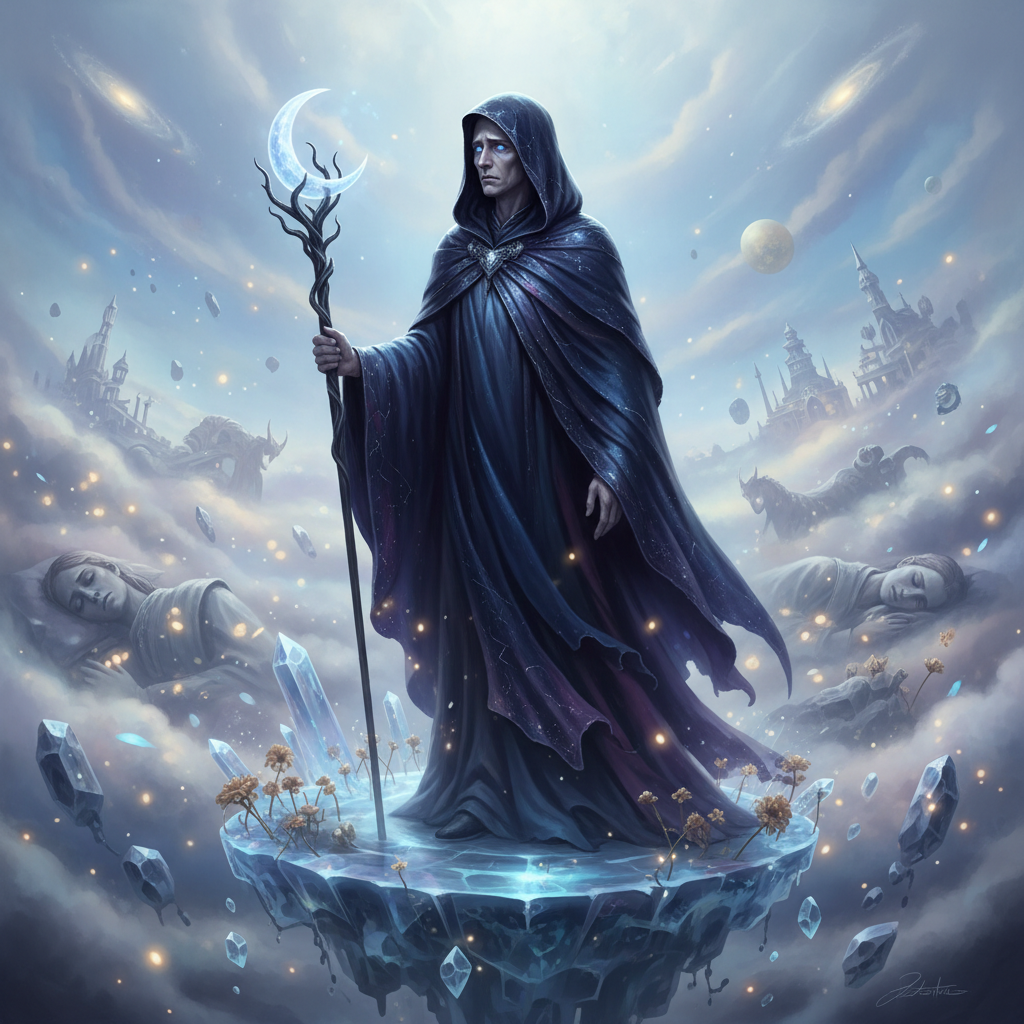
Netflix’s series adaptation of Neil Gaiman’s seminal graphic novel series, The Sandman, has finally come to an end, with the streaming giant releasing its second and final season. For fans of the first season, which was able to nail the hallucinatory, oneiric aesthetic of the original series while streamlining and fleshing out the story beats and character arcs a bit, the second season will have plenty to enjoy. Although it still retains some of the anthology vibe of the comics, the series has gone for a more grounded approach overall, homing in on the arc of Morpheus, the melancholy lord of the Dreaming.
As early as January, Netflix made it clear that the series would conclude with its second season, fueling many fans’ speculation that it was due to the multiple allegations of sexual misconduct that Neil Gaiman has been accused of over the years. (The British author has denied all of them, although some were settled out of court and cannot be publicly reported on.) When asked by a fan on X, formerly Twitter, about the timeline, showrunner Allan Heinberg said that the two-season order was always intended, and the creative team simply judged that they had material for two seasons, and not much more. In retrospect, it’s hard to argue with that decision.
Season 1 adapted Preludes and Nocturnes and The Doll’s House, while the bonus episodes covered the short stories “Dream of a Thousand Cats” and “Calliope” from Dream Country. Season 2 is based on a larger number of comics: primarily Seasons of Mists, Brief Lives, The Kindly Ones, and The Wake, but with significant portions from Fables and Reflections (specifically “The Song of Orpheus” and part of “Thermidor”) and the critically acclaimed short story “A Midsummer Night’s Dream” from Dream Country. The bonus episode is an adaptation of the 1993 one-shot spinoff Death: The High Cost of Living. Absent is the action of A Game of You, which is fine, and also some of the short stories, though that’s also understandable in a tighter narrative focused on the arc of the Dream King.
Season 1 ended with the Dream King (Tom Sturridge) having achieved most of his objectives—escape, reclaim his talismans, deal with the escaped Corinthian (Boyd Holbrook), and avert the Vortex crisis—so Season 2 picks up with him slowly restoring his realm and family’s various holdings. This is interrupted by a rare summons from Destiny (Adrian Lester), gathering together Death (Kirby Howell-Baptiste), Desire (Mason Alexander Park), Despair (Donna Preston), and Delirium (Esmé Creed-Miles) for a tense sibling summit.
That meeting sends Morpheus on a rescue mission for Nada (Umulisa Gahiga), a former lover of his and the queen of the First People, the race he created to worship him, whom he had banished to Hell. This sets Dream up for another confrontation with Lucifer (Gwendolyn Christie), who has not forgiven her Season 1 loss to Morpheus, though rather than engaging in combat this time, Lucifer shocks her sibling by retiring and surrendering her keys to a now-empty Hell, leaving her free to choose her successor from the contenders and nobodies alike. The main contestants are Odin, Order, Chaos, and the demon Azazel.
To find their long-lost brother, Destruction (Barry Sloane), who abandoned his realm many centuries earlier, Delirium drags Morpheus on a journey that will lead inexorably to his destiny—shedding family blood and incurring the wrath of the Kindly Ones.
Highlights, Lowlights, and the End of the Dreaming
High production values, stellar casting, and visuals that remain faithful to the graphic novel’s imagery are a given. As in Season 1, some people have complained of the leisurely pace, but I will not go into that nitpick again—it is intentional, and as far as I’m concerned, the kind of slow, simmering intensity that lets the story breathe.
The weakest part of the whole season is an episode called “Time and Night,” where Morpheus approaches his parents, Time (Rufus Sewell) and Night (Tanya Moodie), for help with his predicament. To be clear, this is canonically sound—the Endless are their children and they would be Morpheus’ parents as well, it’s just that the comic doesn’t show that part of the mythology a lot— but the scenes between Dream and his progenitors are jarringly awkward in dialogue and even Sewell can’t quite make them work; it comes off like a therapy session in A.A. Milne territory rather than the work of mythic forces.
Season 2 also has memorable scenes: Lucifer asking Dream to cut off her wings; the goddess Ishtar (Amber Rose Revah) shedding all her trappings and dancing like a goddess for one last time; Dream explaining to William Shakespeare why he has to write The Tempest; and an reformed Corinthian getting a crush on Johanna Constantine (Jenna Coleman). Other standout sequences are Orpheus’ elegiac song in the Underworld; Dream performing a mercy kill on his son; and the smoldering fury of the Furies, who raze Fiddler’s Green (Stephen Fry), Mervyn Pumpkinhead (Mark Hamill), and Abel (Asim Chaudhry).
Dream’s death is not depicted in a lot of detail: taking Death’s hand once again, he dies in her arms as his Endless siblings mourn him and make room for the new version of himself to enter their ranks. Daniel Hall (Jacob Anderson) is one of them—a human conceived in the Dreaming, and for that reason alone is the only contender, if not an actual Choice. Dazed but powerful, Daniel steps up to take his first steps as Dream.