- calendar_today August 21, 2025
A Procedural Like No Other: How iZombie Mixed Crime, Comedy, and Horror
We are all so accustomed to the zombie template by now that it almost feels as if zombies never went away. We’re not exaggerating when we say that TV in the 2010s was an especially great decade for them. AMC, of course, gave us The Walking Dead (2010–2022). But zombies also made a star turn in Netflix’s offbeat horror-comedy The Santa Clarita Diet (2017–2018). In the space between them, on a network with a somewhat bloodthirstier name than either AMC or Netflix, The CW aired a series that fused crime-solving, zombie pathos, and absurdist humor. iZombie ran for five seasons.
iZombie never cracked the blockbuster stratosphere. But it did amass a fanbase of viewers who appreciated its wry wit, genuine performances, and creative takes on the tired zombie trope. The brain-chomping series was created by Rob Thomas and Diane Ruggiero-Wright and was, in its DNA, based on a Vertigo comic of the same name written by Chris Roberson and drawn by Michael Allred. The CW show only loosely adhered to the comics: enough to remain faithful to the zombie core, but also to invent its universe, as all great shows do.
The comic, set in Eugene, Oregon, followed a very singular protagonist: Gwen Dylan, a zombie who works as a gravedigger. Like her literary cousin from Warm Bodies, Gwen can only retain her memories with the help of a human brain. To drink one every 30 days or else lose her human life. She’s also assisted in her undead life and death by a helpful ghost and a hilariously lovable were-terrier, who provide advice and companionship. The series, however, found its path.
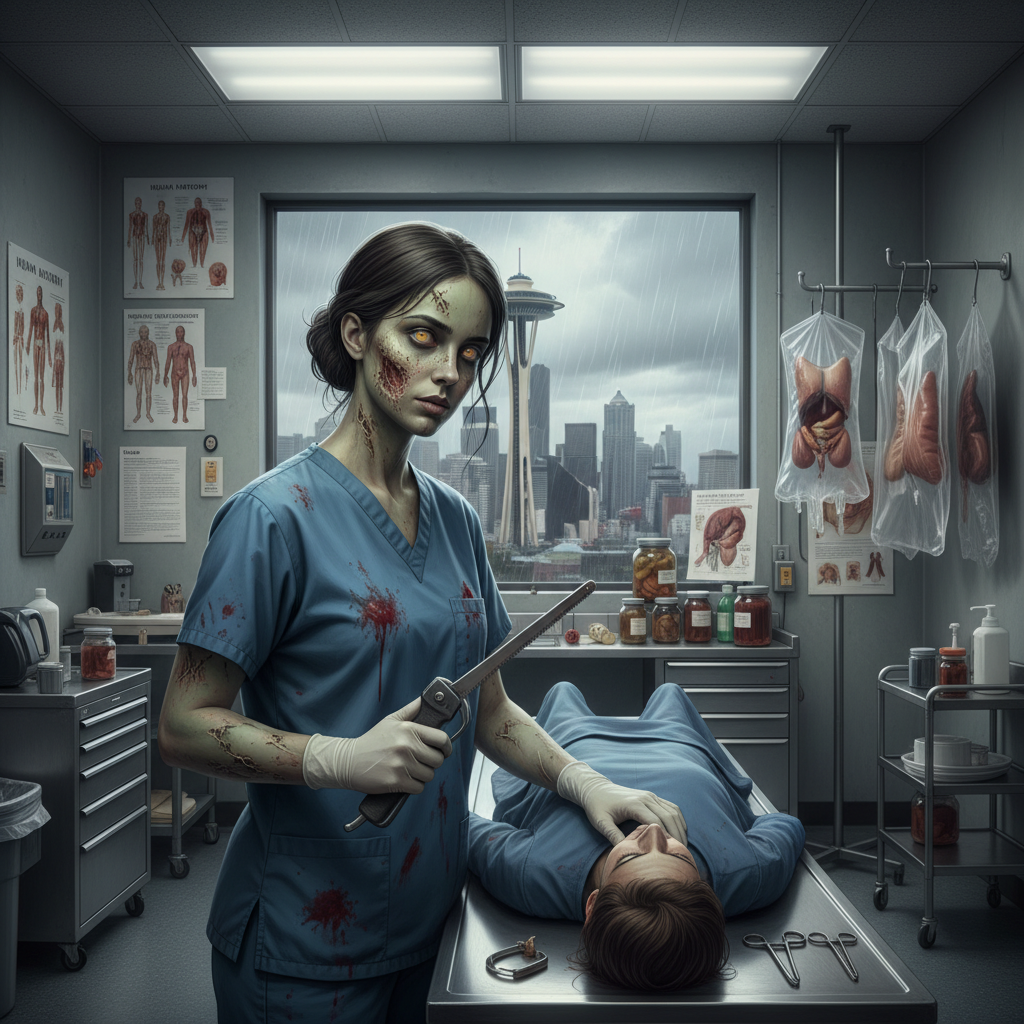
As she regains consciousness, Liv discovers that she’s now one of them. She breaks up with her human fiancé, Major (Robert Buckley); moves out of her college apartment, which she shared with her dimply roomie Peyton (Aly Michalka); and takes a job at the medical examiner’s office in Seattle. Liv gets her body from Major when they break up, of course, and positions herself in the lab so she can surreptitiously grab access to brains. But soon, her secret is out when the office’s receptionist, Ravi (Rahul Kohli), a high-level CDC scientist and true believer in zombie eradication, stumbles upon her odd hours and starts to piece together the gruesome truth: that Liv is now one of them.
Liv’s solution to the mystery? Keeping her head down and absorbing brains to power her zombie metabolism. The fun part? She retains the memories and core personality of each victim she eats. The show’s roster of murdered victims gave McIver a seemingly infinite number of opportunities to play different characters and to do so with sincerity, not kitsch. A dominatrix! A wise old man! A romance novelist! A magician! A pub trivia-loving hitman! We still miss the procession of unforgettable brains and the ways they reimagined Liv’s character at a critical time in her life.
Brains, Bad Guys, and the Inevitable Farewell
The show’s top villain was pretty much a given from the beginning: Blaine DeBeers (David Anders), the smarmy sleaze responsible for the scratches that turned Liv into one of the undead at that boat party. Blaine’s on-again-off-again arc was to rise from dealing tainted Utopium to trafficking brains to sustain an army of wealthy zombies who can’t live without his patented product.
Blaine was an annoying twerp with an aristocratic sneer, a mouth so smug it was straight out of a Dickens novel, and the worst case of daddy issues since Oedipus met his. But boy, could he also murder a well-scripted line, all in the service of being a bona fide mob boss of the brain game. His love interests were appropriately unsuitable too: his de facto partner, Tabytha (Rose McIver in one of many roles, as she also played his sweet, zombie daughter Amanda), who he brings back from the dead, and Liv’s detective, Clive, with whom he has a long, circuitous relationship in their search for the Utopium formula.
As any zombie series must have, it also introduced other excellent side characters, most notably Jessica Harmon’s earnest but sexy Bureau of Investigation agent Dale Brazzio, who became Clive’s eventual partner. Bryce Hodgson was a breakout, laugh-out-loud funny star as Scott E., Blaine’s startup coworker with a penchant for dry cleaning. So beloved was the character that when the season one storyline needed a refresh, Hodgson was brought back as a twin brother, Don E., a long-suffering yet loyal lackey and sidekick to Blaine.
After a strong first season, iZombie seemed to sputter in its last two, even when racking up increasingly bigger bad guys with thematically perfect names like Roswell and Folamole (don’t ask). The final episode suffered from this too; if the rest of the fifth season needed to wrap up with some semblance of speed, the finale’s truncated, no-resolution-for-your-protection finale was a gut punch to the zombie faithful, who were looking for a bit more fan-service conclusiveness. But overall, and this isn’t hyperbole, iZombie broke ground in ways other shows (like this week’s Zombiegate reference) that play with the absurd. It made the bizarre real. In some ways, it made the stupid smart.
It punched up the puns—Major Lillywhite, The Scratching Post as a name for Liv’s favorite bar, Ravi’s dog “Minor”—but it also got clever about the food tropes that came with brain-chomping: stir-fry to hush puppies to protein shakes that would give even the sanest of characters physical disgust. The delicacies, like Holly’s choice of Death Punch with hibiscus as she bumps in her afterlife (in episode “Flight of the Living Dead”), remain some of the standout brain recipes even as our stomachs turn.