- calendar_today August 28, 2025
Korean Culture on the Global Stage Through Animation
For two weeks since its June release, the Netflix original KPop Demon Hunters has led global rankings, streaming more than 33 million times in a little over two weeks. The chart-topping hit is a global sensation, topping in 93 countries and landing at number two in the global top 10 on Netflix. Fan art is already emerging online, and calls for a sequel are growing louder by the day.
The success of KPop Demon Hunters is not just confined to online streaming services, either. In just over a week since the 20 June film launch, two fictional K-pop bands featured in the story have climbed real-world music charts to outperform existing industry titans BTS and Blackpink. Seven songs from KPop Demon Hunters appear on Billboard Hot 100, while the Spotify US ranking currently boasts the top two slots, an unusual honour for fictional bands.
Filmed in South Korea, KPop Demon Hunters is an animated hybrid of fantasy action and Korean pop culture. It tells the story of the three members of a fictional all-female K-pop group called Huntr/x and their musical archrivals, the Saja Boys. The starlets are a dynamic trio of Rumi (Ye Ji Won), Mira (Ha Seung Ri), and Zoey (Caitlin Stryker), who find themselves as international celebrities by day and demon hunters by night, waging a battle between good and evil on and off stage. The plot about friendship, trust, and the importance of being yourself is packed with dynamic music, CGI-enhanced action, humour, drama, and a fantastical nod to Korean folklore.
Visuals and story may be part of the attraction for audiences outside Korea and the Korean diaspora, but it is the music that has made KPop Demon Hunters a breakout success. Korean-Canadian director Maggie Kang cited her admiration for Korean pop stars growing up as an inspiration for the new film. She worked closely with the cast to make the music integral to the script, with a difference: “Instead of magic weapons, this time, they can use their music to drive out the demons,” Kang has said. According to Lashai Ben Salmi, a European community leader with a focus on Korean culture, “The way the music is done in KPop Demon Hunters, where the music is both story-driven and part of a real danger for the characters, gives the film a surprising level of maturity.”
To help with this quality, Kang and co-director Chris Appelhans collaborated with a Korean label and tapped the industry’s most in-demand producers, including Teddy Park, well-known for his work with Blackpink, and Grammy award-winning Lindgren, a producer for the K-pop of BTS and TWICE. They created all seven original songs and four interludes that are blended into the movie, working to ensure they had enough musical depth to sit alongside the biggest real-world K-pop releases.
Amanda Golka, a content creator from Los Angeles who does not follow K-pop in the real world, has discovered an appreciation for KPop Demon Hunters, saying, “I have been blasting the soundtrack from Spotify every time I’m in the car. It’s fascinating how music can be such a universal language.”
Honouring Heritage
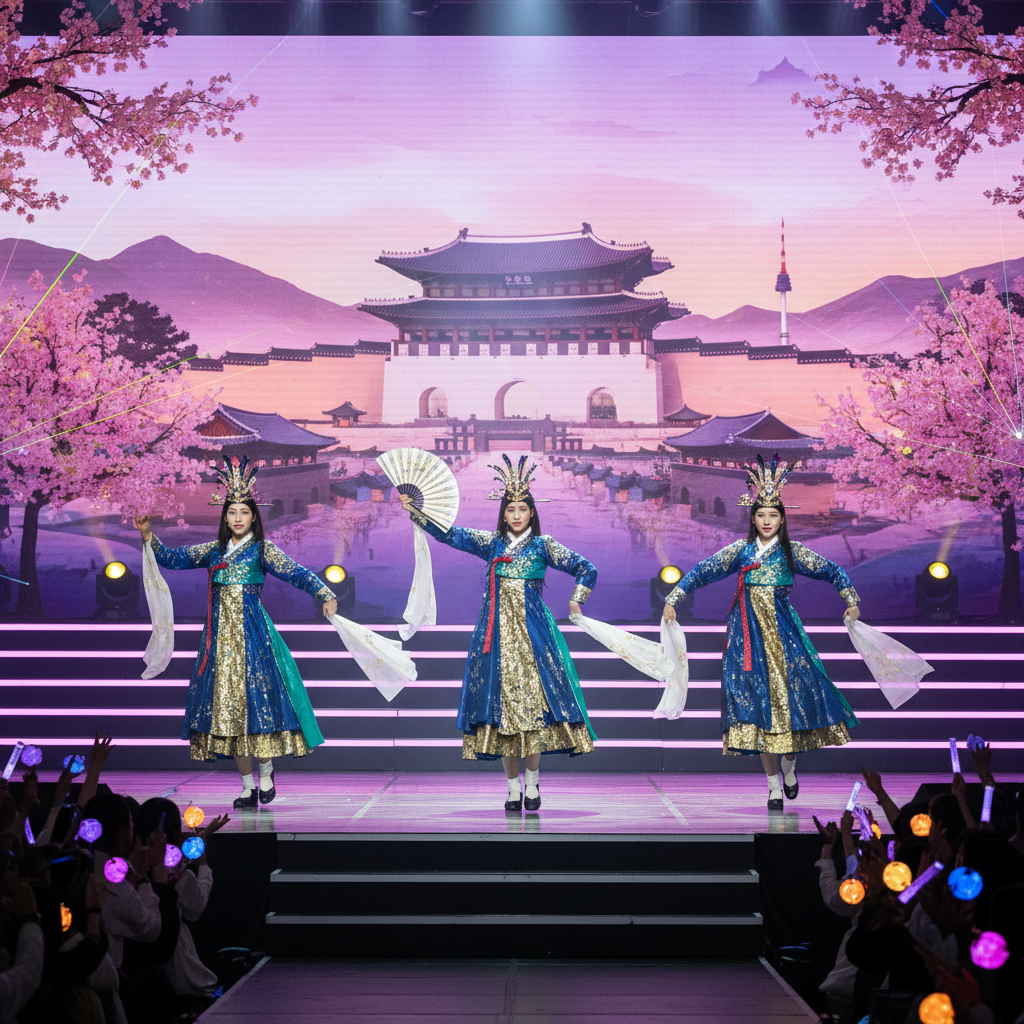
Authenticity has been another important factor in the film’s crossover success. K-pop, K-dramas, and Korean movies have been in the mainstream in the US and other Western markets for years now, but KPop Demon Hunters takes it to a new level. The team took care to include a broad range of Korean life, both modern and traditional, in the background of the scenes, from Korean table manners to shots of Seoul’s most iconic landmarks, like the historical city walls, Hanuiwon healing clinics, traditional bathhouses, and Namsan Tower. Traditional details that might otherwise have been gimmicky have given Korean viewers “a feeling of being seen,” Lashai Ben Salmi, a European community leader who focuses on Korean culture, says.
During production, the team spent time in South Korea, visiting folk villages and photographing the crowds of Myeongdong’s shopping streets for the more modern scenes. The filmmakers drew on traditional clothing and costumes, while the animated lip movements match Korean speech even though all the characters speak English, and the characters’ expressions and physical reactions are recognisably Korean. Some scenes also incorporate Korean words or lyrics similarly.
Scenes with or without language feel as if they were filmed in Korea, a more authentic look than even some Korean media. The film’s attention to detail goes beyond setting and moves into the depiction of K-pop fans themselves: from the colour-changing light sticks, from fan signing events to fans camping out on roadsides, to Korean placards and more K-pop-specific fan traditions like Kalgunmu (perfectly synchronised dance performances) and unique vocabulary. The film also shows different K-pop eras and styles, representing K-pop culture as a whole, and drawing in a casual audience without alienating K-pop fans.
It also draws on traditional Korean folk culture and practices within its central fantasy action. Huntr/x’s swords and fans are reminiscent of tools wielded by Mudang, Korean shamans, and Saja Boys look more like Korean Grim Reapers. Korean folklore legends Dangsan trees, Dokkaebi goblins, and some folk-inspired fantasy elements are interwoven into the film’s visual narrative, while characters use images and motifs that represent shamanism and demons in Korean folk culture. KPop Demon Hunters has even created two mascots that symbolise protective deities and good fortune for Korean culture: Derpy the tiger and Sussy the magpie.