- calendar_today September 2, 2025
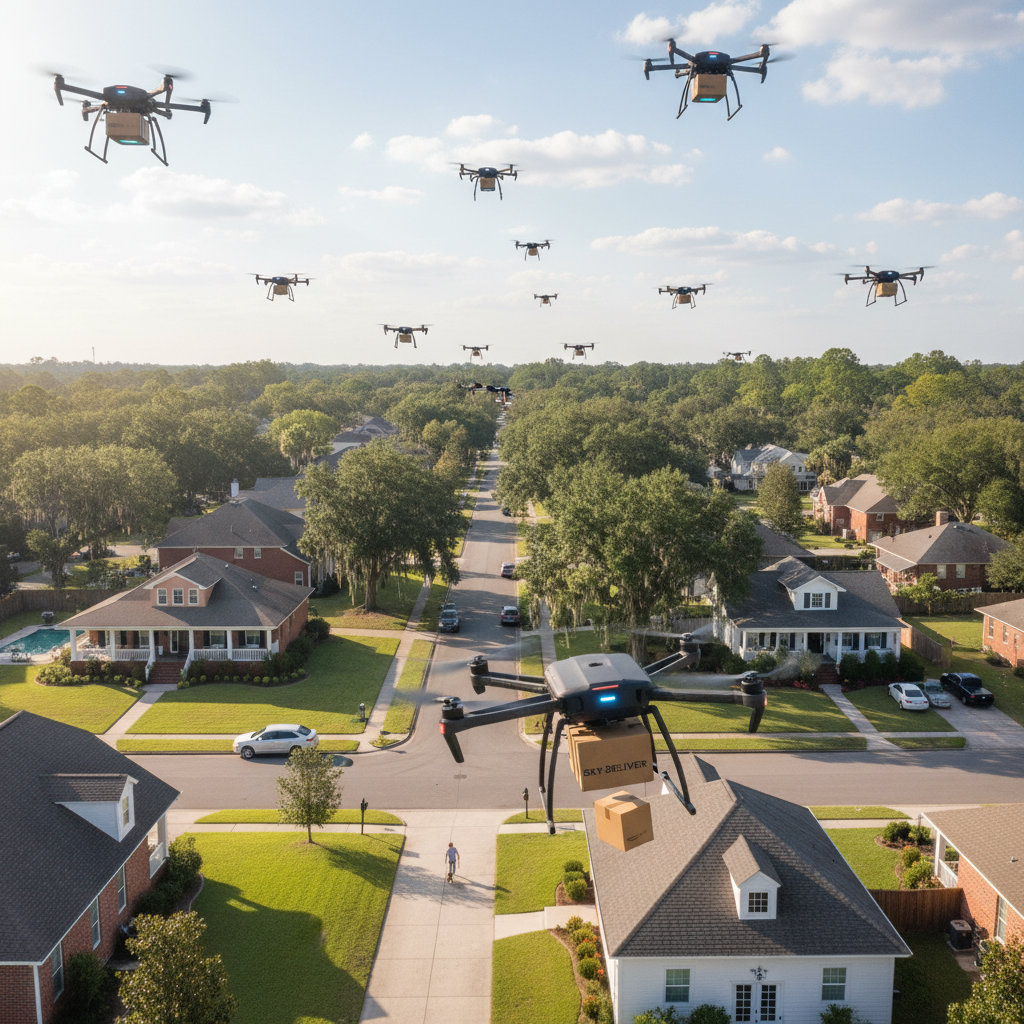
Throughout the southern United States, a silent but influential revolution is taking shape. Far above the treetops and rooftops, tiny flying drones are starting to redefine how consumers get their packages. Amazon, never one to lag in the delivery business, is growing its drone delivery initiative across the region—opening the door to a fresh era of convenience, expediency, and innovation.
For decades, drone delivery was the stuff of science fiction and technology conferences. But today, it’s firmly part of daily life in sections of the South. From Georgia suburbs to Alabama small towns and the vast Texas neighborhoods, Amazon drones are leaving their mark—one delivery at a time.
Changing the Southern Logistics Landscape
The southern states’ logistics industry has traditionally leaned on roads, delivery trucks, and regional distribution facilities. These processes have been effective, but they have shortcomings—particularly with respect to traffic congestion, deliveries in rural areas, and time-critical shipments.
Step in Amazon’s drone initiative. These light-weight drones can carry little parcels to residences in 30 minutes. Autonomous, they are controlled with sophisticated GPS and AI-based systems, and skirt traffic altogether by going straight to their destinations. Such efficiency is already starting to disrupt conventional models of logistics.
For South-based logistics providers, the message is unmistakable: innovation is no longer a choice. Businesses are being forced to rethink delivery approaches in order to stay ahead of new expectations. Faster fulfillment, more intelligent inventory planning, and technology integration are now part of being competitive.
A Boost for Rural and Suburban Communities
Perhaps the most significant effect of Amazon’s drone delivery is its extension into those areas that have traditionally been more difficult to serve. The South boasts a diverse array of communities—some dense and urban, others rural and dispersed. For small towns and far-flung suburbs, quick shipping has never been assured.
Drone delivery does make a difference. These planes don’t need paved highways or large infrastructure. They can travel over forests, fields, and lakes to deliver to homes that would otherwise take days to receive a delivery. In areas of Mississippi or Arkansas, a package that used to take two days to arrive may now take less than an hour.
This greater access isn’t just convenient—it’s empowering. Local businesses are able to obtain supplies more rapidly. Families are able to receive necessities on time. And communities that previously experienced being left behind by the rapid speed of e-commerce are finally up to speed.
Supporting Local Business and E-Commerce
The South has experienced a consistent increase in small-sized e-commerce companies, ranging from Tennessee’s handmade products to Louisiana’s boutique fashion stores. These companies depend on quick, consistent shipping to uphold customer confidence and compete with larger companies.
As Amazon’s drone initiative grows in the area, regional vendors gain a potential advantage. More rapid last-mile delivery may become part of their repertoire —particularly if Amazon is opened up to third-party vendors. This may open up new growth prospects and solidify the region’s small business economy.
It also nudges bigger Southland retailers and logistics firms to think about drone-friendly infrastructure. Warehouses are being reconfigured. Fulfillment centers are being streamlined. Everybody is observing how the skies may inform the future of sales and service.
Environmental and Cost Benefits
Southern states aren’t only concerned with speed—they’re also concerned with sustainability. With increased worry about fuel consumption, emissions, and traffic pollution, drone delivery offers a cleaner option. Drones are electric-powered and travel in direct routes, which makes them more efficient and environmentally friendly compared to traditional trucks.
As time goes by, fewer delivery vans on the highways would translate to less congestion, reduced carbon emissions, and lower maintenance costs. That is welcome news for urban and rural localities attempting to lessen their ecological impact.
For businesses, cheaper delivery would eventually translate to lower shipping charges for consumers. This improves access to e-commerce for all and fosters the sustainable growth of the local economy.
Welcoming the Future, Delivery by Delivery
Of course, there are challenges. There is weather—southern storms, strong winds, and inconsistent rain that can interfere with drone delivery. There are regulatory obstacles, too, particularly regarding airspace safety and privacy legislation. But even with these challenges, the pace is picking up.
Southern states are beginning to make the transition. Local governments are writing ordinances to accommodate drone traffic. Schools are creating training programs for drone technicians. And technology startups in cities such as Austin and Atlanta are beginning to seek out arrangements with drone delivery networks.
This forward-thinking mindset is essential. Because what we’re seeing now is just the beginning. The South is not just a recipient of drone technology—it’s becoming a leader in it.
Final Thoughts
Amazon’s drone delivery expansion is more than a convenience—it’s a sign of transformation. In the southern United States, where communities are diverse, landscapes are vast, and innovation is rising, drones represent a new way forward.
Quicker deliveries, improved access, cleaner transport, and new opportunities for business are all in the air. For residents, retailers, and logistics companies alike, the message is clear: the sky is no longer the limit—it’s part of the solution.
As drones hum quietly across the skies of the South, they’re delivering more than packages. They’re delivering progress. And it’s only going to increase from here.