- calendar_today August 14, 2025
The Southern U.S. real estate market in 2025 remains one of the most dynamic in the country. While interest rates have steadied, investor caution is still present. Across states like Texas, Florida, Georgia, North Carolina, Tennessee, and Alabama, developers and buyers are showing a renewed focus on cash flow reliability, location quality, and alignment with the region’s ongoing demographic shifts.
Which real estate sectors are standing out in the South? Seven key property types continue to draw strong investor attention—adapting not only to national trends but also to the region’s booming population, growing infrastructure, and pro-business climate.
Multifamily Housing: The Reliable Performer
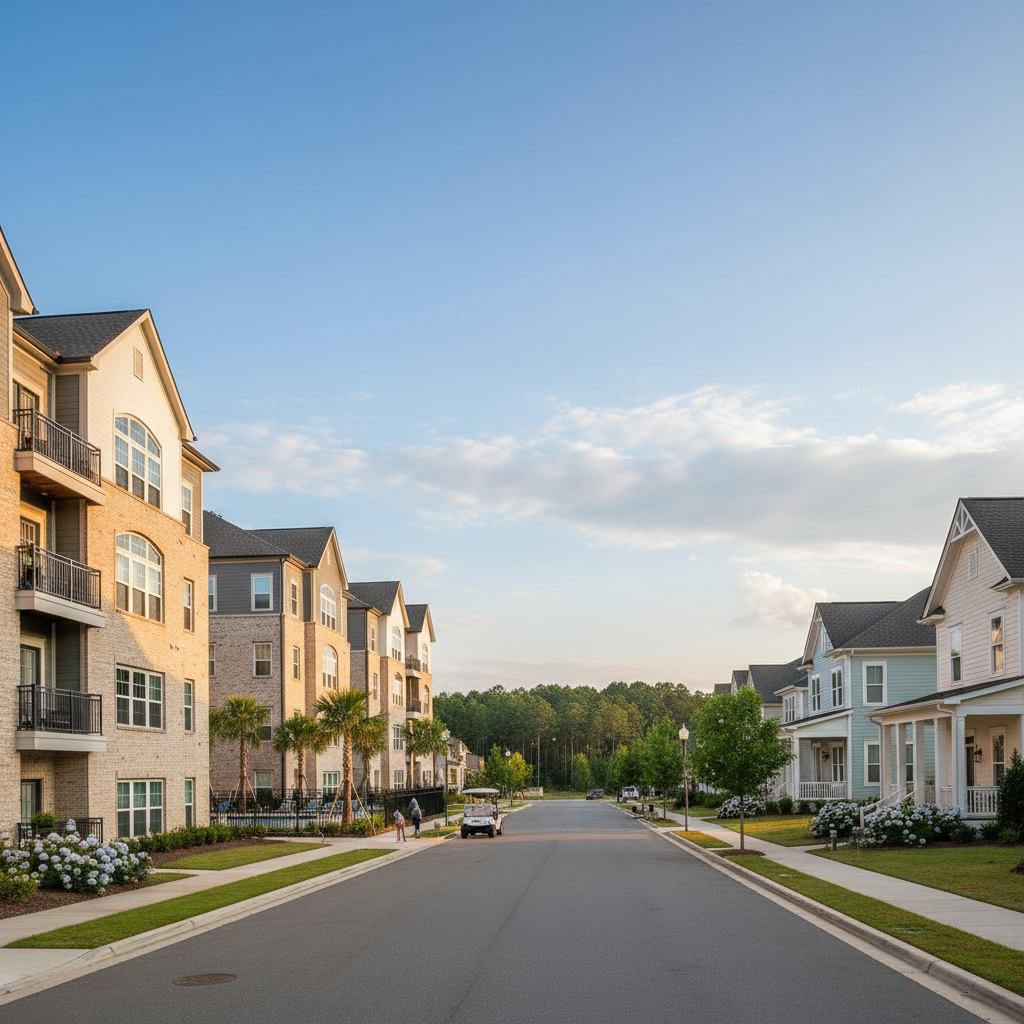
Multifamily housing continues to be one of the South’s strongest performers. Class B and C apartments across cities like Atlanta, Tampa, Charlotte, and Austin are essential for meeting rental demand as many households remain priced out of homeownership.
Vacancy rates remain tight—hovering around 4–5% in many metros—while rental growth is steady, supported by sustained in-migration and job creation. Build-to-rent developments and mid-rise apartments in suburban corridors are gaining popularity, offering affordability and modern amenities. Investors benefit from consistent tenant demand and 3%+ annual rent increases, especially in fast-growing Sun Belt markets.
Industrial Properties: Still a Growth Engine
Industrial real estate in the South continues to outperform. With strategic access to ports, highways, and logistics hubs, cities like Dallas-Fort Worth, Savannah, Nashville, and Jacksonville are seeing robust growth in warehouse, distribution, and cold storage facilities.
JLL’s 2025 report highlights rent growth above 6% and vacancy rates below 4% in key Southern corridors. The rise of e-commerce, U.S.-based manufacturing, and AI-driven logistics has made the Southern U.S. a magnet for industrial investment. Pension funds and REITs are increasingly allocating capital to this asset class, drawn by scalability and rising tenant demand.
Single-Family Rentals in Suburban Markets
The Southern suburbs are leading the national trend in single-family rentals (SFRs). Working families continue to leave dense urban areas in favor of affordable, spacious homes with flexible leases. Regions around Raleigh, Orlando, San Antonio, and Birmingham are particularly strong for SFR demand.
Roofstock’s 2025 data shows that more than 60% of investors plan to expand SFR holdings, with the South topping the list for growth. These rentals offer strong occupancy, less intensive maintenance per unit, and dependable returns in neighborhoods with good schools and expanding infrastructure.
Population Growth: The Sun Belt Advantage
The Southern U.S. continues to attract new residents from across the country, thanks to job opportunities, lower taxes, and lifestyle benefits. Texas, Florida, North Carolina, and Georgia are leading in population growth, which is directly translating into housing demand.
At the same time, mid-sized cities like Chattanooga, Fayetteville, and Gulfport are seeing increased interest from investors seeking lower entry costs and strong appreciation potential. The South’s economic expansion, tied to logistics, tech, and advanced manufacturing, is fueling long-term demand across both primary and secondary markets.
Mixed-Use Developments & Urban Revitalization
Southern cities are revitalizing their downtown cores through mixed-use developments that combine residential, retail, coworking, and public space. Places like Greenville (SC), Huntsville, and Knoxville are redefining urban living with pedestrian-friendly neighborhoods.
Even larger metros like Tampa, Charlotte, and Dallas are investing heavily in mixed-use hubs, drawing younger renters and remote professionals. These projects often come with higher development hurdles, but long-term returns are promising in locations with strong planning and community engagement.
Niche Assets on the Rise: Senior & Student Housing
The Southern U.S. is seeing rapid growth in both senior and student housing. With a growing retiree population, cities like Sarasota, The Villages, and parts of the Carolinas are expanding assisted living and memory care communities. Occupancy rates in the Southeast senior housing sector topped 86% in early 2025, per NIC MAP Vision.
Student housing is also a solid performer near major universities in Texas, Florida, and North Carolina. Cities like Gainesville, College Station, and Athens are seeing pre-leasing near full capacity. Modern, amenity-rich apartments are becoming the norm, with smart technology and shared social spaces driving tenant preference.
Risk Factors and Investment Cautions
Despite the advantages, investors must stay alert to regional risks. Natural disasters—such as hurricanes, flooding, and wildfires—are increasingly affecting insurance costs, particularly in coastal areas. This is impacting investor margins and forcing many property owners to invest in resilient infrastructure.
Zoning laws and rental regulations remain relatively investor-friendly in much of the South, but urban centers like Austin and Atlanta are considering more aggressive housing policies. Investors must stay informed on local ordinances that could affect short-term rental income or large-scale development.
Though interest rates have cooled from their peaks, borrowing remains more expensive than pre-2022 levels. Strategic underwriting and localized knowledge are essential for long-term success.
Expert Insight: What the Analysts Say
“Investors are leaning into Southern markets because they combine population growth with strong fundamentals,” says Lauren Bellingham, senior economist at CBRE. “Multifamily and industrial assets are especially strong, but the real differentiator is understanding regional migration and infrastructure investments.”
Redfin’s 2025 Southern Housing Report points to affordability and mobility as the key drivers for real estate performance. Analysts emphasize that the South’s demographic strength gives it an edge—but not all markets are created equal.
Strategic Diversification is Key in 2025
In 2025, successful Southern real estate investors are diversifying across asset types and geographies. Multifamily housing continues to be a reliable base, while industrial remains a high-growth sector tied to regional logistics. SFRs offer stability in suburban zones with growing families.
Mixed-use developments and niche housing—like senior and student-focused properties—are benefiting from clear demand trends. The key to outperforming in the South is selecting the right city, neighborhood, and strategy based on local dynamics and future-proof fundamentals.
As the Southern U.S. continues to lead in job creation, migration, and housing demand, real estate investors with strategic vision and regional insight are well-positioned to thrive in 2025 and beyond.